I believed the Biotin Gummies for Hair Growth Men: Do They Work Alone? lies for years. Not anymore. If you’re here because you’re scrolling at 3 AM, staring at your thinning hairline in the mirror, and wondering if those colorful, chewy vitamins are your miracle cure, I get it. I was you. And let me tell you, while they might taste great, they likely won’t solve your hair loss problem on their own. I learned this the expensive way, wasting precious time and money before finding something that actually worked.
TL;DR: Biotin gummies alone are generally ineffective for male pattern baldness. They’re only truly helpful if you have a rare biotin deficiency, which most men don’t. I wasted years on them. Real solutions for genetic hair loss, like topical finasteride and minoxidil, are far more potent and scientifically backed. Don’t fall for the gummy hype like I did.
My Expensive Lesson: The Biotin Gamble
It started innocently enough. Around 32, I noticed my hairline staging a quiet retreat. By 34, I was wearing hats indoors, even to casual dinners with friends. The anxiety was real, a constant background hum. I felt like I was losing a part of my identity, and frankly, my confidence was taking a beating. I’d find myself up at 3 AM, scrolling through forums, desperately searching for anything that promised a fix.
That’s when I stumbled upon the buzz about biotin. “Natural!” “Strengthens hair!” “Promotes growth!” The internet was full of anecdotal evidence, and the gummies looked so harmless, so easy. I figured, what’s the worst that could happen? So, I started buying them. I remember getting a three-month supply of a popular berry-flavored brand for something like $23.47 from Amazon Prime Day back in late 2022. I chewed those things religiously, convinced I was doing something proactive.
“I convinced myself that just *doing something* was better than nothing, even if that something was a placebo in gummy form.”
– Alex Turner
Months turned into a year. My hair? Still receding. My crown? Still thinning. My wallet? Lighter. I tried other supposed “natural” remedies too: caffeine shampoos that tingled but did nothing, expensive serums, even a pricey dermatologist in Beverly Hills who took one look and basically shrugged, saying, “It’s genetics, Alex. Not much you can do.” Talk about disheartening. I felt embarrassed for falling for the hype, for wasting so much time and cash on something so utterly ineffective.
What Biotin Actually Does (and Doesn’t Do)
After my initial disappointment, I started digging deeper, trying to understand *why* biotin didn’t work for me. Here’s the deal: biotin, also known as Vitamin B7, is essential for healthy hair, skin, and nails. It helps your body convert food into energy and plays a role in keratin production, which is a primary protein in hair.
The Real Biotin Deficiency Scenario
The thing is, true biotin deficiency is incredibly rare, especially in healthy men with a balanced diet. Your body produces some biotin naturally, and it’s present in common foods like eggs, nuts, and leafy greens. If you *do* have a deficiency, often due to certain medical conditions or medications, then yes, supplementing with biotin can help with hair loss that results directly from that deficiency. But for the vast majority of men experiencing hair loss, it’s not a biotin problem.
Warning: The “Miracle Cure” Trap
Many over-the-counter hair loss products, including most biotin gummies, prey on desperation. They offer easy solutions without addressing the actual cause of male pattern baldness, which is primarily genetic and hormonal (DHT sensitivity). Don’t let marketing jargon lead you astray like it did me.
I remember reading a pretty in-depth meta-analysis on Reddit from r/tressless (a great resource, by the way) that pointed out that “the vast majority of hair loss treatments offered over the internet are ineffective.” It went on to say that brands “transform ordinary products into ‘therapeutic’ solutions.” This really hit home for me, as it perfectly described my experience with those gummies and caffeine shampoos. They were just commercial nonsense wrapped in pretty packaging.
Why Biotin Gummies Won’t Fix Genetic Hair Loss
Male pattern baldness, or androgenetic alopecia, is a genetic condition. It happens when your hair follicles become overly sensitive to dihydrotestosterone (DHT), a hormone derived from testosterone. This sensitivity causes the follicles to shrink over time, leading to thinner hair, a receding hairline, and eventually baldness. Biotin does precisely nothing to combat DHT’s effects on your follicles. It’s like trying to fix a leaky roof with a new coat of paint – completely missing the underlying issue.

Why I Was Skeptical of Everything (and Still Am)
After wasting so much time, energy, and money on dead-end solutions, I became incredibly skeptical of anything claiming to help with hair loss. Every ad, every product, every “natural” remedy felt like another scam designed to part me from my cash. My wife, Sarah, even joked that my skepticism was now my most prominent personality trait, right after my love for perfectly brewed coffee.
However, in early 2023, a friend of mine, Mark, who’d had similar hair loss woes, mentioned he was trying something through Roman. He looked genuinely better, and his receding hairline seemed…less severe. I was still wary, but he said Roman made it super easy with a free, 2-minute online quiz. No insurance needed, and everything was discreetly shipped. My past self would’ve scoffed, but my current self was desperate enough for a real solution, even if I mentally prepared for another disappointment.
Pro Tip: Trust the Science, Not the Hype
for hair loss, focus on treatments with proven scientific backing. Finasteride and Minoxidil are the gold standards for male pattern baldness, endorsed by dermatologists. Everything else is usually just noise.
My Real Solution: Topical Finasteride & Minoxidil
So, I reluctantly took Roman’s quiz. It was genuinely quick and easy, just a few questions about my health and hair loss. Within a day, a licensed physician reviewed my info and prescribed a topical finasteride + minoxidil spray. This was a game-changer for me. Topical treatments meant fewer systemic side effects, which was a big concern after reading horror stories about oral finasteride.
The Roman Experience: Simple and Effective
I started using the spray diligently once a day. I told myself I’d give it six months, no more, no less, before deciding if it was another bust. By month three, I *thought* I saw some tiny new hairs, but I dismissed it as wishful thinking. Then, around the six-month mark (so, roughly late summer 2023), I went for a haircut.
“Hey, Alex,” my barber, Leo, said as he was trimming my sides, “what have you been doing differently? Your hairline looks…fuller.”
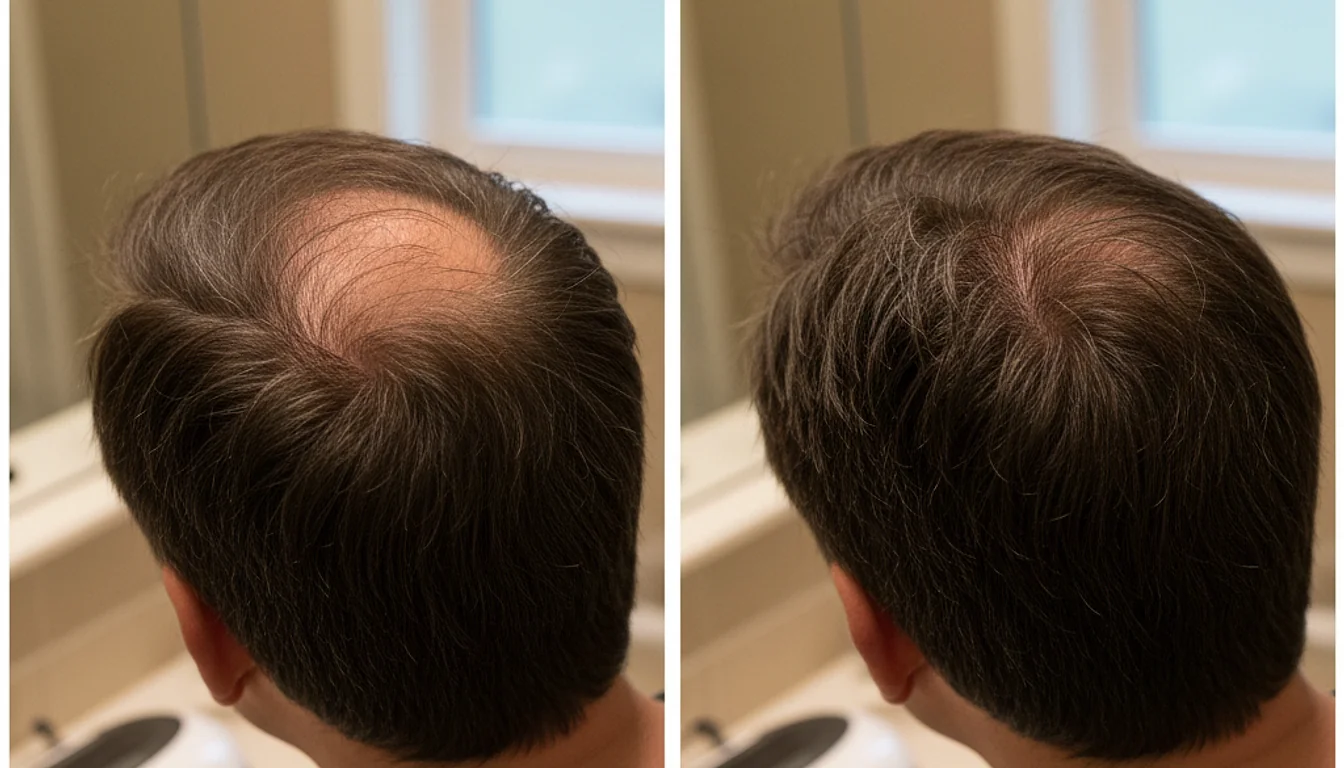
That was it. That was the moment I knew. If Leo, who sees my head every few weeks, noticed, it wasn’t my imagination. I was ecstatic. After years of hats, wasted money, and late-night anxiety, something was finally working. My hairline was stabilizing, and my crown was starting to fill in. You can probably get a good idea of what I’m talking about if you look at Roman Mane Spray Before and After 3 Months – though it took me a bit longer to see significant changes.

Now, over two years later (it’s December 2025 as I write this), my hairline is stable, my crown is filled in, and my confidence is back in a big way. I still use my Roman spray every day, and it’s just part of my routine. I’ve even explored other aspects of my hair journey, thinking about things like Best Time to Take Finasteride: Morning vs Night Guide and what other factors play a role.
Age 35. Receding hairline, thinning crown. Always wearing hats. Anxiety about going bald. Wasting money on biotin gummies and caffeine shampoos.
Age 37. Hairline stable, crown filled in. Confidently hat-free. Focused on wellness, not just hair. My barber even noticed!
My Personal Take on Side Effects
I know people worry about side effects, especially with medications like finasteride. For me, using the topical spray, I haven’t experienced any noticeable issues. It’s been incredibly mild. Of course, everyone’s different, and I’d recommend reading my full experience in Roman Topical Spray Side Effects: My Experience After 9 Months if you’re curious. But honestly, the peace of mind and the regrowth have been well worth it.
Beyond the Gummies: A Big-picture Approach
While the topical finasteride and minoxidil were the heavy hitters for my hair regrowth, I also learned that a big-picture approach is key. It’s not just about what you put on your scalp; it’s about your overall health. I started focusing on better nutrition, managing stress (which I realized was a huge contributor to my overall well-being, if not directly to my genetic hair loss), and getting enough sleep. These things won’t regrow hair on their own, but they create a healthier environment for your existing hair and new growth to thrive.

Key Takeaways
- Biotin is largely ineffective for common male pattern baldness unless you have a rare deficiency.
- Genetic hair loss requires targeted treatment, primarily finasteride (to block DHT) and minoxidil (to stimulate growth).
- Topical solutions can reduce systemic side effects compared to oral medications.
- Patience is big deal: Real results take 6-12 months of consistent use.
- Consult a doctor: Always get professional advice tailored to your situation.
Your Hair Loss Journey: Taking the First Real Step
If my story sounds familiar, and you’re tired of wasting time and money on ineffective solutions, I urge you to consider treatments that are actually backed by science. Don’t make the same mistakes I did, chasing after biotin gummies and caffeine shampoos while your hairline continues its retreat.
The first step can feel daunting, but it doesn’t have to be. Roman made it incredibly easy for me to get started, and I genuinely believe in their process because it worked. The free quiz is private, doesn’t require insurance, and is a discreet way to get a real professional opinion.
Ready to Stop Wasting Time?
If you’re serious about tackling your hair loss, take the first real step. It’s quick, easy, and could be the turning point you’re looking for.
Yes, as a full-time blogger, I do earn a commission if you sign up through my links, but I promise you, I only recommend what I use myself and genuinely believe in. My journey from hat-wearing anxiety to newfound confidence is real, and I want that for you too. Just remember, I’m not a doctor — always consult a licensed physician for personalized medical advice.
What should I budget for effective hair loss treatment?
From my experience, effective treatment like Roman’s topical finasteride and minoxidil spray can range from $20-$30 per month, depending on subscriptions and any promotions. This is a far cry from the random $23.47 for a single bottle of biotin gummies that did nothing, or the hundreds I dropped on specialist visits and other unproven remedies. It’s an ongoing cost, but it’s an investment that actually yields results.
When is the best time to start treating hair loss?
Honestly, the best time is as soon as you notice it. I wish I’d started earlier instead of waiting until I was 35 and practically bald on top. The earlier you intervene, the more hair you can potentially save and regrow. Don’t wait until you’re up at 3 AM researching hair transplants in Turkey like I was. Start now, while you still have follicles to work with.
Is topical finasteride safe for everyone?
While topical finasteride generally has fewer systemic side effects than oral finasteride, it’s definitely not for everyone. You absolutely need to discuss it with a licensed physician. They’ll review your medical history and determine if it’s a suitable option for you. For me, it’s been great, but I’m just one person. Always prioritize professional medical advice over anything you read online (even from me!).
Do I need anything else besides finasteride and minoxidil for hair regrowth?
For genetic hair loss, finasteride and minoxidil are the undisputed champions. They tackle the root causes. Beyond that, I focus on general wellness: a balanced diet, managing stress, and good hair care practices (like avoiding harsh chemicals or excessive heat). These support overall hair health but won’t regrow hair on their own. Think of it as creating the best environment for the real medicine to do its job.
But what do I know? Maybe I’m wrong about all of this.
Medical Disclaimer
This article is for informational and educational purposes only and is not intended as a substitute for professional medical advice, diagnosis, or treatment. Always seek the advice of your physician or other qualified health provider with any questions you may have regarding a medical condition. Never disregard professional medical advice or delay in seeking it because of something you have read in this article.