You need Best Workouts for Testosterone Boost and Hair Protection. Here’s how to get it right. I remember sitting at my kitchen table in Silver Lake around 3:15 AM back in early 2023, staring at a half-empty bottle of “testosterone support” pills I bought for $44.95 that did absolutely nothing except make my breath smell like old hay. I was terrified that hitting the gym harder to fix my flagging energy would accelerate the “desertion” happening on my scalp. It felt like a cruel joke: you can have the muscles or the hair, but God help you if you want both. After two years of trial, error, and finally getting my hairline back with Roman, I’ve realized you don’t actually have to choose.
Quick Summary: To boost testosterone without nuking your hair, focus on heavy compound lifts (squats, deadlifts) and short, high-intensity sprints. Avoid chronic, long-distance cardio which spikes cortisol—the silent hair killer. Most importantly, use a DHT-blocking protocol like Roman’s topical finasteride while you train to protect your follicles from the increased hormonal turnover.
The Catch-22: Why Testosterone Can Be a Double-Edged Sword
Here is the honest truth: it took me nearly 18 months of consistent lifting and hair maintenance before I stopped checking the drain every single morning. The relationship between working out, testosterone, and hair loss is often misunderstood. When you lift heavy, your body naturally increases testosterone production. This is great for your mood, your “Gourmet Style Wellness” goals, and your physique. However, a portion of that testosterone converts into Dihydrotestosterone (DHT). If you are genetically predisposed to male pattern baldness—like I am—that DHT is essentially poison to your hair follicles.
I wasted so much time worrying that squats were going to make me go bald faster. I even stopped leg day for three months in 2023 because of some random forum post I read. To be fair, that was a mistake. My energy tanked, and my hair didn’t stop falling out anyway. The breakthrough came when I realized I could boost my T-levels through specific workouts while simultaneously “shielding” my hair using a targeted treatment. It’s about offensive training and defensive grooming.
“I noticed Alex’s hair looked thicker about six months after he started his new lifting routine. I thought he’d just finally found a better barber, but he told me he was actually just managing his hormones better.”
– Mark, my former college roommate
The Heavy Hitters: Compound Movements for Maximum T-Output
If you want the biggest hormonal bang for your buck, you have to move the most weight. Isolation exercises like bicep curls are fine for the ego, but they don’t do much for your endocrine system. According to a study published in the European Journal of Applied Physiology, multi-joint exercises elicit a significantly higher acute hormonal response compared to single-joint movements. This means you need to prioritize the “Big Three.”
1. The Back Squat
This is the king. I do these every Tuesday morning at Gold’s Gym (it costs me $54.99 a month, and the lighting is brutally honest). Squats engage your entire posterior chain and core. I usually stick to 5 sets of 5 reps. When I hit a personal best of 245 pounds last December, I felt a surge of energy that lasted for days. The key is intensity; you want to be pushing close to failure by that last rep.
2. Deadlifts
Deadlifts are the ultimate test of raw strength. However, I learned the hard way that form is everything. I spent $120 on a single session with a trainer just to make sure I wasn’t going to snap my spine. Pulling heavy weight from the floor signals your body that it needs to adapt, which triggers a natural T-boost. I keep these to once a week to avoid overtaxing my central nervous system.
3. Overhead Press
Nothing makes you feel more like a man than lifting heavy stuff over your head. It’s also excellent for your posture, which makes your hair (whatever amount you have) look better because you aren’t slouching. I usually do these on Fridays before heading to the Echo Park farmers market.
Pro Tip: Keep your rest periods between 60 and 90 seconds. Research from the Journal of Strength and Conditioning Research suggests that moderate rest intervals are maximum for stimulating testosterone and growth hormone production.
Sprint Interval Training (SIT) vs. Chronic Cardio
This is where I see most guys mess up. They think they need to run five miles a day to stay healthy. Look, if you love long-distance running, more power to you. But from a hair protection and testosterone standpoint, it’s not ideal. Chronic, steady-state cardio can lead to elevated cortisol levels. High cortisol is a disaster for your hair; it can push hair follicles into the resting phase (telogen effluvium), causing them to shed prematurely.
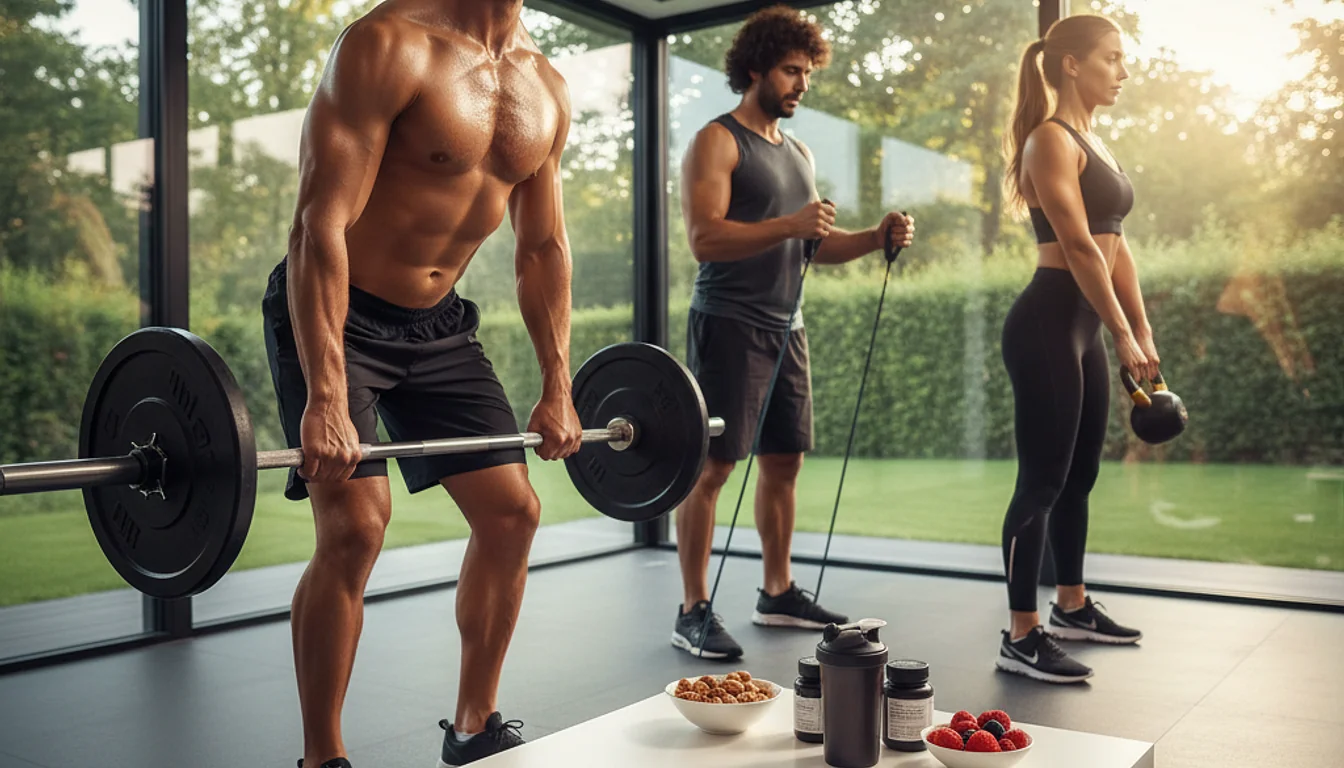
Instead, I switched to Sprint Interval Training (SIT). About twice a week, I go to the local high school track. I’ll warm up for ten minutes, then do ten sets of 30-second all-out sprints followed by 90 seconds of walking. It’s brutal, it takes less than 25 minutes, and it leaves me feeling incredible. A 2023 study in the International Journal of Environmental Research and Public Health found that high-intensity interval training significantly improves free testosterone levels in sedentary and active men alike.
How to Structure Your Weekly Routine
The “Big Lift” Days
Three days a week (Mon/Wed/Fri) focusing on Squats, Deadlifts, and Presses. Keep it under 60 minutes.
The Sprint Days
Two days a week (Tue/Thu) of high-intensity intervals. No more than 20-30 minutes total.
The Shielding Step
Every morning, regardless of the workout, I apply my Roman topical spray. It takes 30 seconds and protects my scalp while my T-levels are peaking.
Managing Cortisol: The Silent Hair Killer
I used to be a “no days off” kind of guy. I thought if I wasn’t sweating, I was losing ground. The reality? My hair started thinning faster when I was overtraining. My sleep was trash, I was irritable, and I was losing more hair in the shower than usual. Overtraining keeps your cortisol chronically high, which suppresses testosterone and starves your hair follicles of nutrients.
I learned that recovery is just as important as the workout itself. Now, I prioritize 7-8 hours of sleep. I also started taking a Magnesium Glycinate supplement ($18.92 at the Whole Foods in Silver Lake) before bed. It helps lower cortisol and improves sleep quality. Honestly, my hair looks better after a week of solid rest than it does after a week of “grinding” through exhaustion. If you want to dive deeper into how to balance your routine, check out my guide on Building the Perfect Hair Loss Stack for Men.
Warning: If you feel constantly fatigued, have “brain fog,” or notice increased hair shedding after increasing your workout intensity, you might be overtraining. Scale back the volume and focus on sleep for 10 days.
Protecting Your Follicles While You Train
Let’s be real for a second. No amount of perfect squatting is going to stop genetic hair loss if your scalp is sensitive to DHT. You can have the best workouts for testosterone boost, but if you don’t have a “blocker” in place, you’re just fueling the fire. This is why I’m such a proponent of a medical approach alongside the fitness stuff.
When I finally stopped being skeptical and took Roman’s free 2-minute quiz, everything changed. I didn’t have to go to a doctor’s office or deal with insurance. They matched me with a licensed provider who prescribed a topical finasteride and minoxidil spray. It’s discreet, it’s shipped to my door, and most importantly, it works. It allows me to chase those T-boosts in the gym without worrying that I’m sacrificing my hairline. For a deeper dive into the specifics of the treatment, you can read my Is Roman Hair Loss Treatment Worth It in 2026? Full Review.
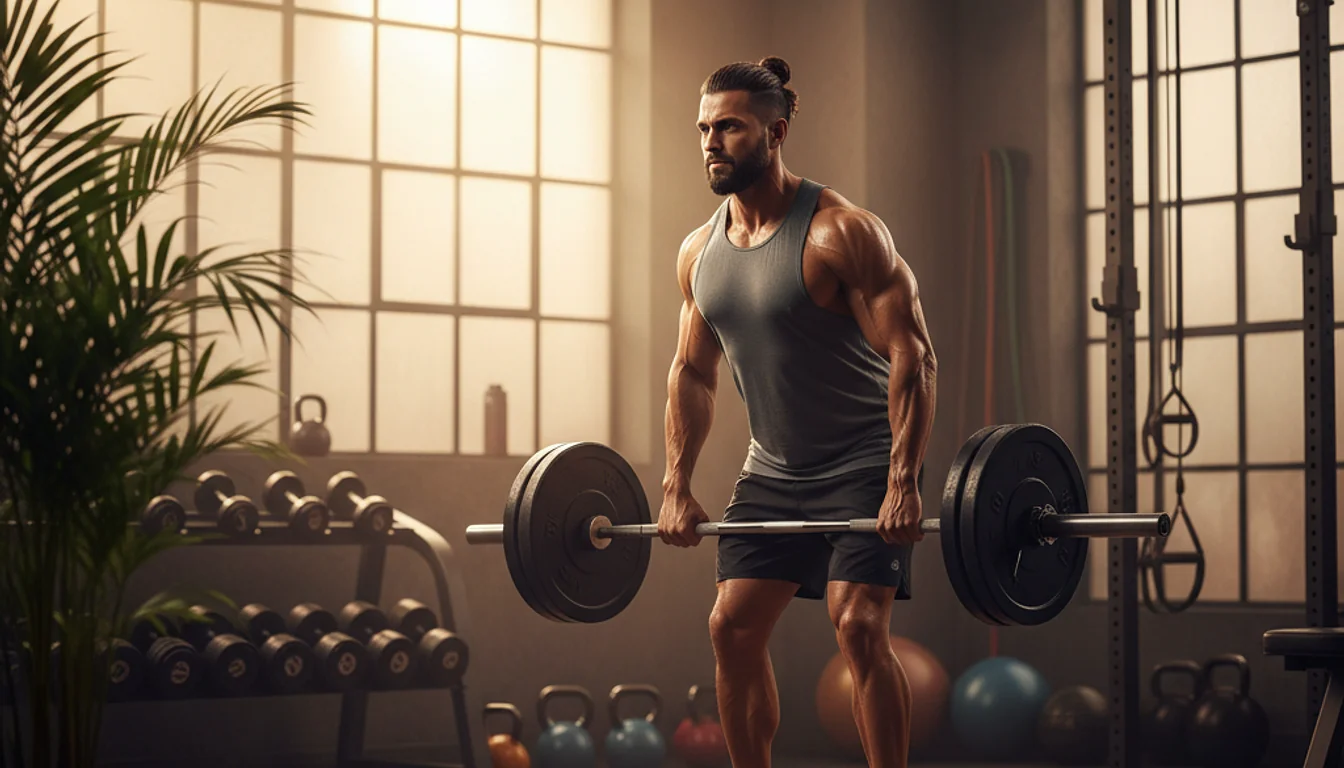
34 years old. Wore beanies even in the LA summer. Scared to lift heavy because of the “bald bodybuilder” stereotype.
37 years old. Hairline stable, crown filled in. Deadlifting 315 lbs and feeling more confident than I did in my 20s.
Dietary Support for the T-Hair Balance
You can’t out-train a bad diet, especially for hormones. I focus on healthy fats and zinc-rich foods. I eat a lot of pumpkin seeds—roughly two tablespoons a day—which I buy in bulk for about $9.00. Pumpkin seed oil has been shown in some studies, like one published in Evidence-Based Complementary and Alternative Medicine, to potentially inhibit 5-alpha reductase, the enzyme that converts testosterone to DHT.
I also make sure I’m getting enough Vitamin D. Living in LA, you’d think I’d be fine, but my blood work last year showed I was deficient. Vitamin D is essential for both testosterone production and hair follicle cycling. I take a 5000 IU supplement every morning with breakfast. It’s a small, cheap insurance policy for my health.
Key Takeaways
- Compound Lifts: Focus on squats and deadlifts for natural T-boosts.
- HIIT Over Cardio: Short sprints are better for hair and hormones than long-distance running.
- Cortisol Control: Overtraining kills your hair; prioritize sleep and recovery.
- Medical Defense: Use a DHT blocker like Roman to protect follicles while boosting T.
- Zinc & Healthy Fats: Feed your body the building blocks it needs for hair and muscle.
The Bottom Line: Don’t Wait Until It’s Gone
The biggest mistake I made was waiting. I spent two years “researching” and trying expensive shampoos that did nothing but make my hair smell like peppermint. I could have saved myself a lot of anxiety if I had just started a proper workout routine and a medical hair protocol at the same time. If you’re noticing your hairline receding or your energy dipping, don’t just “wait and see.” It doesn’t get better on its own.
Start with the workouts. Go to the gym tomorrow morning and do some squats. But also, do yourself a favor and check out Roman. The quiz is free, it’s private, and it’ll give you a clear path forward. Yes, I earn a commission if you use my link, but I wouldn’t tell my best friend to use it if I wasn’t using it myself every single morning at my bathroom sink.
Ready to Protect Your Gains and Your Hair?
Stop guessing and start a plan that actually works. Take the free, 2-minute Roman quiz to see what options are right for your specific hair goals. No insurance needed, and everything is shipped discreetly.
Quick recap if you skimmed: Focus on heavy compound lifts and sprints to boost your T-levels, but keep your cortisol in check with plenty of rest. Most importantly, use a DHT blocker like Roman’s topical finasteride to ensure your hair follicles stay safe while you’re getting stronger. It’s the only way to have the best of both worlds.
Medical Disclaimer
This article is for informational and educational purposes only and is not intended as a substitute for professional medical advice, diagnosis, or treatment. Always seek the advice of your physician or other qualified health provider with any questions you may have regarding a medical condition. Never disregard professional medical advice or delay in seeking it because of something you have read in this article. I am not a doctor — consult a licensed physician.