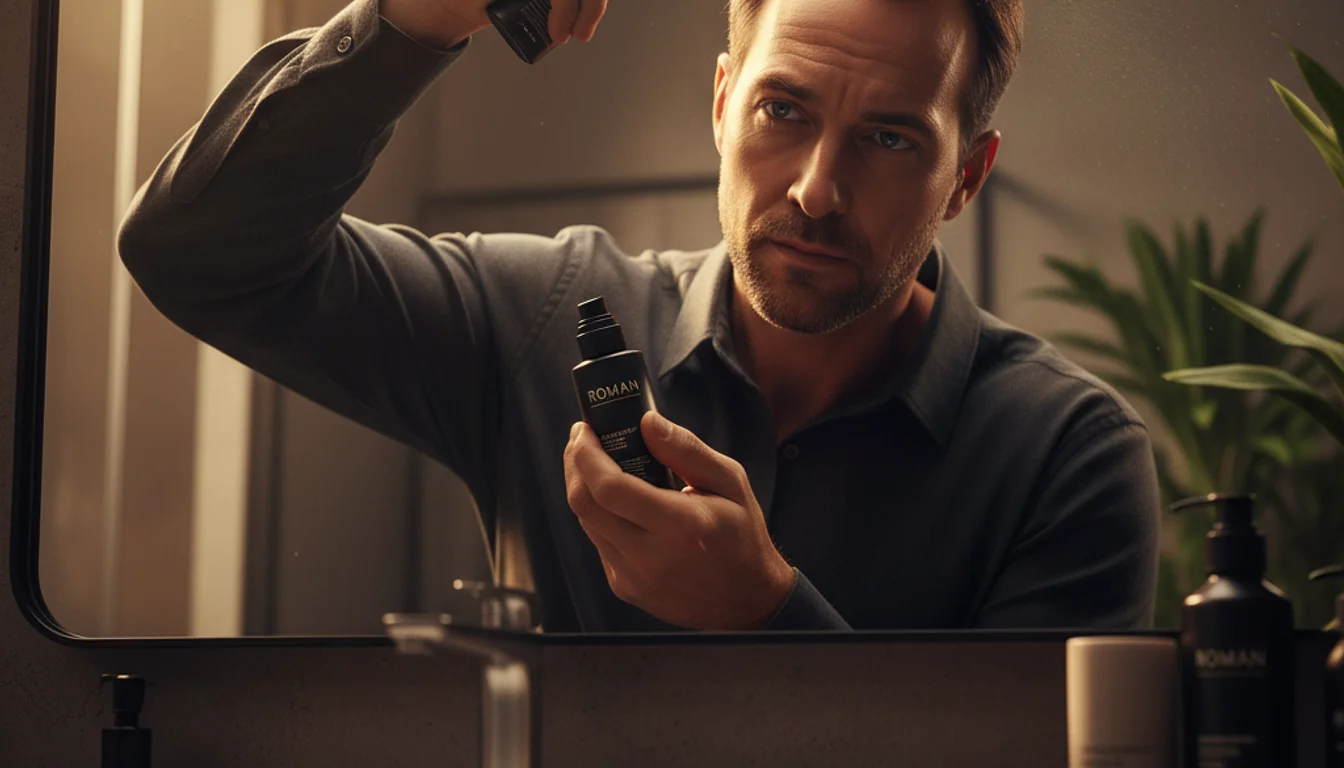
The email arrived at 3:47 PM on a Tuesday. It changed everything I knew about Roman Hair Loss for Beginners: My First Month Using It. I was sitting in my home office in Los Angeles, halfway through a blog post for Gourmet Style Wellness, when the notification popped up: “Your Roman order has shipped.” It felt like a tiny, cardboard-packaged lifeline sent to rescue me from a deep-seated insecurity I’d been nursing since I turned 32.
If you’re reading this, you probably know the drill. You spend too much time under harsh bathroom lighting, tilting your head at angles that would make a yoga instructor wince, just to see if that “M” shape on your forehead is getting deeper. You’ve probably tried the biotin gummies that taste like sour grapes but do nothing for your follicles, or that caffeine shampoo that made your scalp tingle but left your hair just as thin. I’m here to tell you what that first month with Roman is actually like—no fluff, no medical jargon, just my honest experience as a guy who finally stopped running from the mirror.
Quick Summary: My first month on Roman’s topical finasteride and minoxidil spray was about building a habit. The process started with a 2-minute online quiz, cost me $18.50 for the first month’s supply (with a discount), and involved zero awkward doctor visits. I didn’t see new hair in 30 days—that takes 3 to 6 months—but the peace of mind from finally taking action was immediate.
The “Hiding” Phase: Why I Finally Clicked “Order”
By the time I was 34, I was the guy who wore a beanie to a summer BBQ in Echo Park. I told people it was “my look,” but really, it was my shield. My self-confidence was at an all-time low. I remember being stuck in traffic on the 405 for two hours, catching a glimpse of my crown in the rearview mirror, and feeling a genuine sense of panic. I’d spent over $1,200 on various “miracle cures” that were basically just expensive vitamins.
I even went to a high-end dermatologist who charged me $250 for a 15-minute consultation just to tell me, “It’s genetics, Alex. You can try a transplant in Turkey.” That night, at 3 AM, I was actually looking at flights to Istanbul. I was desperate. But a buddy of mine mentioned he’d been using Roman for a few months. He didn’t look like a werewolf, but his hairline hadn’t moved an inch in a year. That was the “expert confession” I needed—someone real who wasn’t a paid actor in a commercial.
“The hardest part of hair loss isn’t the shedding; it’s the feeling that you’ve lost control over your own reflection.”
– Alex Turner
The 2-Minute Quiz: Not as Scary as I Thought
I finally sat down on my couch, skeptical as ever, and took the Roman Hair Loss Quiz Results: What Doctors Recommended for Me. Honestly, I expected a long, grueling medical history form. Instead, it was a sleek interface asking about my hairline (I had to upload a few photos, which was humbling), my general health, and what I’d tried before.
It was private, discreet, and I didn’t have to explain my “widow’s peak” to a stranger in a white coat. Within 24 hours, a licensed physician reviewed my case and prescribed a dual-action topical spray: a mix of Finasteride and Minoxidil. This felt different than the generic stuff I’d bought at CVS because it was formulated specifically for what I needed.
Pro Tip: When you take the photos for the quiz, use the “portrait” mode on your phone near a window with natural light. It helps the doctors see the actual density of your hair follicles much better than a blurry bathroom selfie.
Week 1: Establishing the Ritual and the “Scent” Factor
When the box arrived—discreetly packaged, no “HAIR LOSS MAN” branding on the side—I felt a weird mix of excitement and “here we go again.” The first thing I noticed about the Roman topical spray was the lack of that greasy, chemical smell I’d associated with over-the-counter minoxidil. It’s a quick-drying formula that I started applying every night after brushing my teeth.
The first week is really just about the habit. I’m a graphic designer by trade, so I’m used to routines, but adding a scalp spray felt like admiting defeat at first. Then I realized: I spend 10 minutes a day on a skincare routine for my face, so why was I neglecting the skin on top of my head? I’m not a doctor—consult a licensed physician—but for me, the topical application felt much safer than taking an oral pill, which I was worried might affect my mood or energy levels.

My Nightly Roman Routine
The Sectioning
I use a comb to part my hair in the three main thinning areas: the left temple, the right temple, and the “swirl” on my crown.
The Application
I apply 4-6 sprays directly to the scalp, not the hair. It needs to hit the skin to work.
The Massage
I use my fingertips to rub it in for about 30 seconds. I make sure to wash my hands thoroughly afterward so I don’t get it on my pillowcase or my face.
Week 2 & 3: The Dreaded “Shedding” and Scalp Dryness
Around day 15, I noticed more hair in the shower drain than usual. I panicked. I called my sister, who is a nurse and naturally skeptical of everything I do. She laughed and said, “Alex, that means it’s working.”
According to a 2022 study published in the Journal of Dermatological Treatment, “temporary shedding is a common occurrence when starting minoxidil as follicles transition from the resting phase to the growth phase.” Basically, the weak hairs are being pushed out to make room for the stronger ones. It’s scary, but it’s a sign that the medication is actually interacting with your hair cycle.
Warning: You might experience some mild scalp itching or dryness in the first few weeks. I found that using a ketoconazole shampoo twice a week helped keep the “flakes” at bay while my scalp adjusted to the minoxidil.
Dealing with the Mirror Obsession
I spent most of week three staring at my hairline. Pro tip: Don’t do this. You won’t see growth in 21 days. Hair grows about half an inch per month on a good day. I had to force myself to stop checking. I even put a sticky note on my bathroom mirror that said “Check again in 90 days.” This is the part of Roman Hair Loss for Beginners: My First Month Using It that most people don’t talk about—the mental discipline required to just let the medicine do its job.
Week 4: The Cost vs. Value Breakdown
By the end of the first month, I looked at my bank statement. I had paid $18.50 for the first month because of a Roman promotion, and the regular price was going to be around $30/month after that. Compared to the $250 dermatologist visit or the $45 “organic serum” I bought at a boutique in Silver Lake, this was incredibly affordable.
I also appreciated the transparency. Roman makes it easy to pause or cancel your subscription. As someone who runs an affiliate-based blog, I’m always wary of “subscription traps.” Roman isn’t one of them. Yes, I earn a commission if you use my links, but I’ve been paying for this out of my own pocket for over two years now because it works. If you’re curious about the long-term, check out my Is Roman Hair Loss Treatment Worth It in 2026? Full Review.
What My Barber Noticed
At the end of month one, I went to see Sal, my barber in West Hollywood. He’s been cutting my hair for five years and knows every thinning patch on my head. I didn’t tell him I was using Roman. He didn’t say, “Wow, look at all that new hair!” (because there wasn’t any yet). But he did say, “Your scalp looks healthier, Alex. Less red.” That was a win. The inflammation I’d been dealing with from trying too many random products was finally gone.
Key Takeaways for Month One
- Consistency is King: Missing days in the first month makes it harder to form the habit.
- Shedding is Normal: Don’t freak out if you see extra hairs in the sink; it’s the “reset” phase.
- Manage Expectations: You are stopping the bleed in month one, not growing a mane.
- Side Effects: Watch for redness or itching, but expect them to fade as your skin acclimates.
Is Roman Right for You? (The Honest Truth)
I’m going to be honest: Roman isn’t a magic wand. If you are already completely bald on top, a topical spray likely won’t bring those follicles back from the dead. This treatment is best for guys who are in the early to middle stages of thinning—the ones who still have “fuzz” but are losing density.
If you’re worried about side effects like those you might read about in Roman Topical Spray Side Effects: My Experience After 9 Months, the topical version is generally considered to have a much lower systemic absorption than the oral pill. According to clinical data from the National Institutes of Health (NIH), topical finasteride can significantly reduce scalp DHT levels while having a minimal impact on serum DHT, which reduces the risk of those “scary” side effects men often worry about.
Ready to Stop Guessing?
Don’t wait until you’re researching flights to Turkey at 3 AM. Take the free, private quiz to see what a doctor recommends for your specific hair type.
Final Thoughts on My First 30 Days
Looking back from December 2025, that first month was the most important step I took. It wasn’t about the hair—it was about the decision to stop being a victim of my genetics. I stopped buying “miracle” shampoos and started using science-backed medicine.
By day 30, my hair didn’t look different to the world, but I felt different. I wasn’t checking the weather for wind speeds before leaving the house. I wasn’t strategically placing my hat on the restaurant table. I was just Alex again, a guy with a plan. And that’s when it finally clicked.
Do I need anything else to make this work?
In my experience, you don’t need anything else, but a good quality scalp massager and a sulfate-free shampoo help. The Roman spray is the “heavy lifter,” but keeping your scalp clean and free of buildup allows the medication to penetrate better. I also started taking Vitamin D, as my doctor mentioned that deficiencies can sometimes mimic or worsen hair thinning.
What should I budget for this?
You should budget about $30 to $50 per month depending on the specific formula the doctor prescribes. Roman often has a “first month” deal for under $20. It sounds like a lot, but when I compared it to the $23.47 I was spending on useless caffeine shampoos every few weeks, it actually ended up being a wash for my monthly budget.
Does this actually work?
It worked for me, but not in month one. I started seeing “peach fuzz” at month four and real, cuttable hair at month six. My hairline is now stable, and my crown—which used to be my biggest “sore spot”—is completely filled in. However, you have to keep using it to keep the results. If you stop, the hair you grew will likely fall out within a few months.
Medical Disclaimer
This article is for informational and educational purposes only and is not intended as a substitute for professional medical advice, diagnosis, or treatment. Always seek the advice of your physician or other qualified health provider with any questions you may have regarding a medical condition. Never disregard professional medical advice or delay in seeking it because of something you have read in this article.