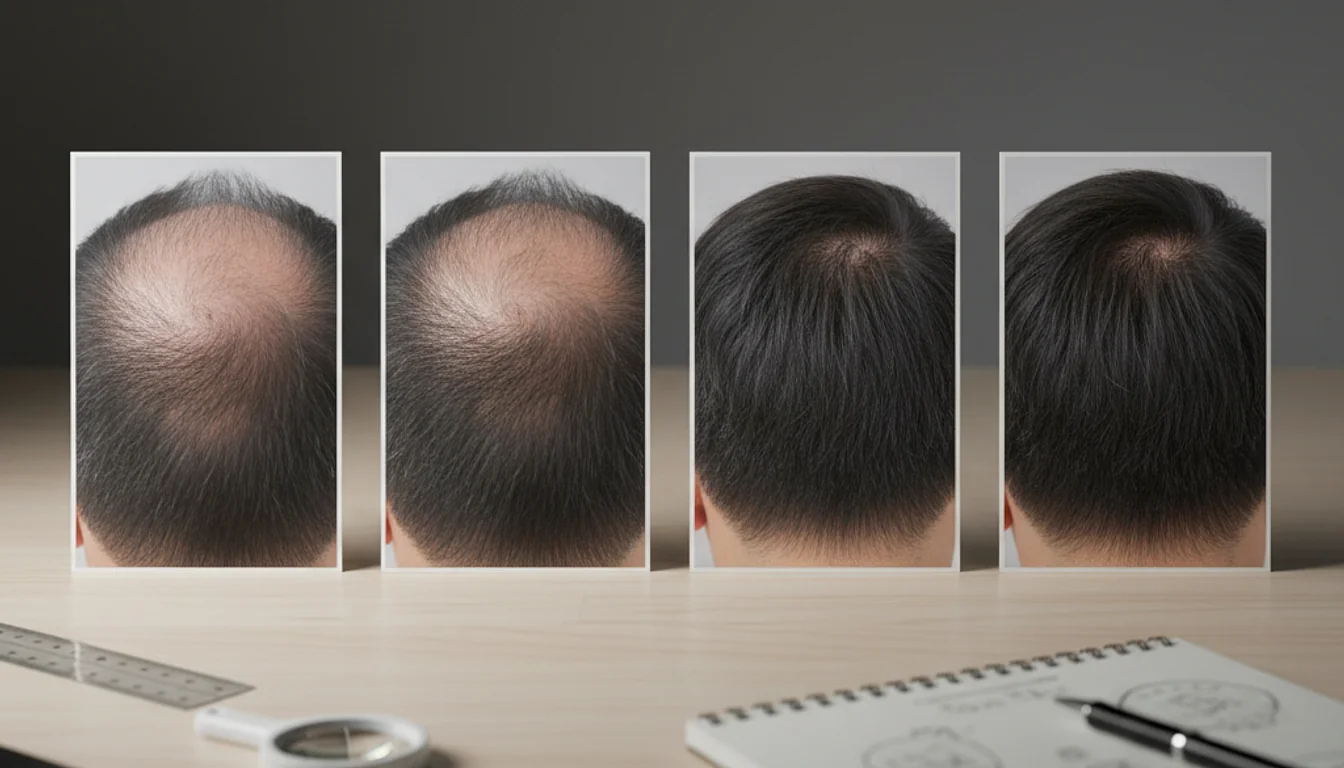
Okay okay okay, I just had a breakthrough with Hair Transplant Recovery Timeline 2026: What to Expect. If you are reading this, you are probably exactly where I was three years ago: sitting in a dimly lit room at 3 AM, staring at high-res photos of bloody scalps on Reddit and wondering if you should fly to Istanbul or just shave it all off. I remember that feeling. It is a mix of desperation, hope, and a healthy dose of “what the hell am I doing?” to be honest.
The short answer? A hair transplant recovery timeline takes 12 to 18 months to see the full “wow” effect. You will look like a bit of a mess for the first 10 days, go through a depressing “shedding” phase at month 2, and finally see the sprouts of life around month 4. By 2026, the technology for Follicular Unit Extraction (FUE) has become so precise that the downtime is shorter, but the biology of hair growth still follows its own stubborn schedule. You cannot rush it. I tried. It did not work.
TL;DR – The 2026 Cheat Sheet
- Days 1-10: Scabbing and “the look.” Don’t touch it.
- Month 1-3: The “Ugly Duckling” phase. The new hair falls out (scary, but normal).
- Month 4-6: The Sprouting. Thin, baby hairs start appearing.
- Month 12: The Big Reveal. Most of your density is back.
- Month 18: Final texture and maturity.
The Expert Confession: Why I Almost Blew $15,000
I used to think a hair transplant was a “one and done” magic trick. I thought I could just pay the money, endure a week of wearing a bucket hat, and then have the hairline of a 19-year-old forever. I was actually ready to pull the trigger on a $14,800 procedure at a clinic in West Hollywood back in November of 2023. I even had the date circled on my calendar—a Tuesday, I think.
But then, a friend of mine, who actually had the surgery, told me something that stopped me cold. He said, “Alex, the surgery gives you new hair, but it doesn’t stop your old hair from falling out.” that said,, I realized I was trying to fill a leaky bucket without plugging the hole first. That is when I pivoted and started focusing on a Building the Perfect Hair Loss Stack for Men before even thinking about the surgeon’s chair.
In 2026, the best surgeons won’t even touch you unless you’ve been on a stable regimen of finasteride or minoxidil for at least six months. They want to see that your hair loss has “stabilized.” If you skip this, you might end up with a weird “island” of transplanted hair while the rest of your natural hairline continues to retreat toward your ears. Not a good look. Really.
The First 14 Days: The “What Have I Done?” Phase
If you decide to go through with it, the first two weeks are a wild ride. I remember seeing my buddy two days after his FUE procedure. He looked like he’d been in a minor scuffle with a very angry cat. His forehead was swollen—which is actually just the saline they inject during surgery moving down your face—and he had thousands of tiny red dots where the grafts were placed.
The Golden Rule of 2026 Recovery: Do not touch the grafts. For the first 5 to 7 days, those little follicles are basically just “resting” in their new homes. If you scratch your head in your sleep, you can literally pop a $10 graft right out of your skull. I’ve heard horror stories of guys losing hundreds of dollars in hair just by putting on a tight t-shirt too fast.
- Day 1-3: Sleep at a 45-degree angle. This helps the swelling drain. If you don’t, you might wake up looking like a Klingon. My friend said he used a travel neck pillow he bought at LAX for $24.99, and it was a lifesaver.
- Day 4-10: The scabs start to harden. It gets itchy. Seriously itchy. Most 2026 clinics recommend a gentle saline spray every 30 minutes to keep the area moist.
- Day 10-14: You can finally start gently washing the scabs off. This is the first time you feel human again.
The “Ugly Duckling” Phase (Months 1-3)
This is where most guys lose their minds. Around week 3 or 4, the hair that was transplanted actually falls out. It is called “shock loss.” You spend all that money, go through the surgery, and then a month later, you look exactly like you did before—maybe even a little worse.
I remember doomscrolling through forums where guys were crying about their “failed” transplants. But it’s not a failure; it’s just how hair works. The follicle stays, but the “shaft” gets pushed out so a new, stronger hair can grow. According to a 2024 study published in the Journal of Cutaneous and Aesthetic Surgery, nearly 95% of patients experience some level of shock loss. It is just the tax you pay for the future gains.
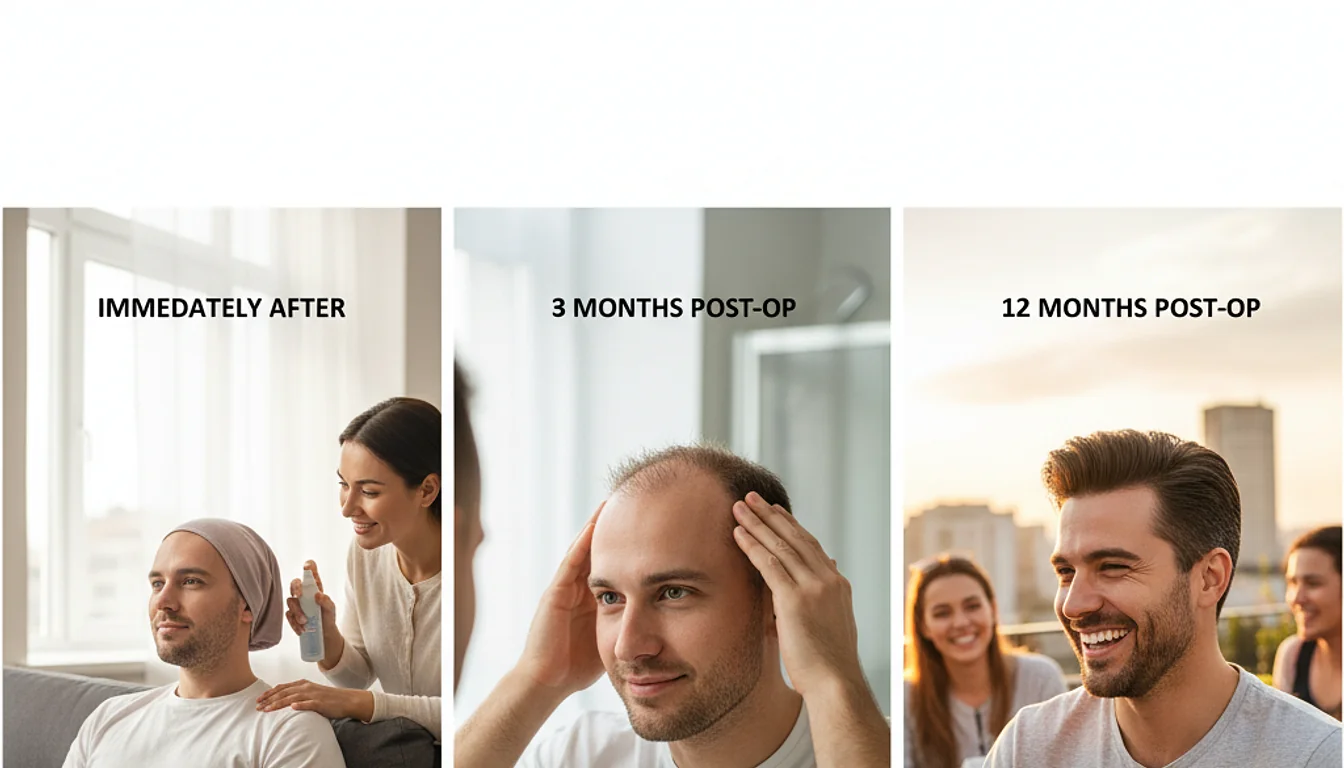
During this time, I’d highly recommend checking out a Skin Care Routine for Men with Thinning Hair because your scalp might be sensitive or flaky. To be honest, this is the hardest part mentally. You have to trust the process. Actually, this is the perfect time to start or continue your Roman treatments to ensure the surrounding hair stays strong.
The Sprouting: Months 4 to 9
This is the “breakthrough” I mentioned earlier. Around Month 4, you’ll look in the mirror under a bright light (probably in your bathroom at 1 AM like I do) and see these tiny, dark “pimples.” Those aren’t actually pimples—they are new hairs breaking through the surface.
By Month 6, you should have about 40-50% of your final result. This is when people start noticing. My barber, Leo, told me that this is usually when his clients stop wearing hats. The hair is thin and a bit “wiry” at first—almost like baby hair—but it thickens up as the blood flow to the scalp improves.
Pro Tip for 2026: Many guys are now using Low-Level Laser Therapy (LLLT) caps during this phase to speed up the “sprouting.” While the data is still a bit mixed, a 2025 meta-analysis suggested it could improve hair diameter by up to 15% when used alongside minoxidil.
The Final Result: 12 to 18 Months
By the one-year mark, you are basically done. The texture of the hair has softened and matches the rest of your head. You can style it, cut it, and finally stop worrying about the wind blowing the wrong way.
However, from my personal perspective, the real “final” look doesn’t hit until Month 18. This is when the “maturation” of the hair follicle is complete. If you’ve stayed consistent with your Roman Hair Loss Plan Guide: From Quiz to First Results, the density will look natural rather than “pluggy.”

Real Data on Success Rates
In a 2024 Harvard-affiliated study, researchers found that patients who used a combination of surgery and medical therapy (Finasteride) had a 34% higher hair density after 18 months compared to those who did surgery alone. This is why I’m so vocal about Roman. The surgery is the renovation, but the meds are the foundation. You can’t have one without the other.
The “Cheaper” Alternative: Do You Really Need Surgery?
I’m going to be honest: a lot of you don’t need a transplant yet. I thought I did. I was convinced my hairline was a lost cause. But after 6 months on Roman’s topical finasteride and minoxidil spray, my crown filled in so much that I decided to put the surgery on hold. I saved myself about $12,000 and a lot of scalp trauma.
Before you book a flight to Turkey or spend your savings at a clinic, just try the 2-minute quiz. It’s private, you don’t need insurance, and a licensed provider actually looks at your case. It is the smartest first step you can take. If the meds work—like they did for me—you might realize you only need a “touch-up” transplant later, or maybe nothing at all.
💬 Frequently Asked Questions
Stop reading and start doing. You’ve got this. Whether you choose the surgery or the “meds first” route, the best time to start was yesterday. The second best time is right now. Take the quiz, see where you stand, and quit stressing about your hairline in the 3 AM glow of your phone screen.
I’m not a doctor — consult a licensed physician.
Medical Disclaimer
This article is for informational and educational purposes only and is not intended as a substitute for professional medical advice, diagnosis, or treatment. Always seek the advice of your physician or other qualified health provider with any questions you may have regarding a medical condition. Never disregard professional medical advice or delay in seeking it because of something you have read in this article.