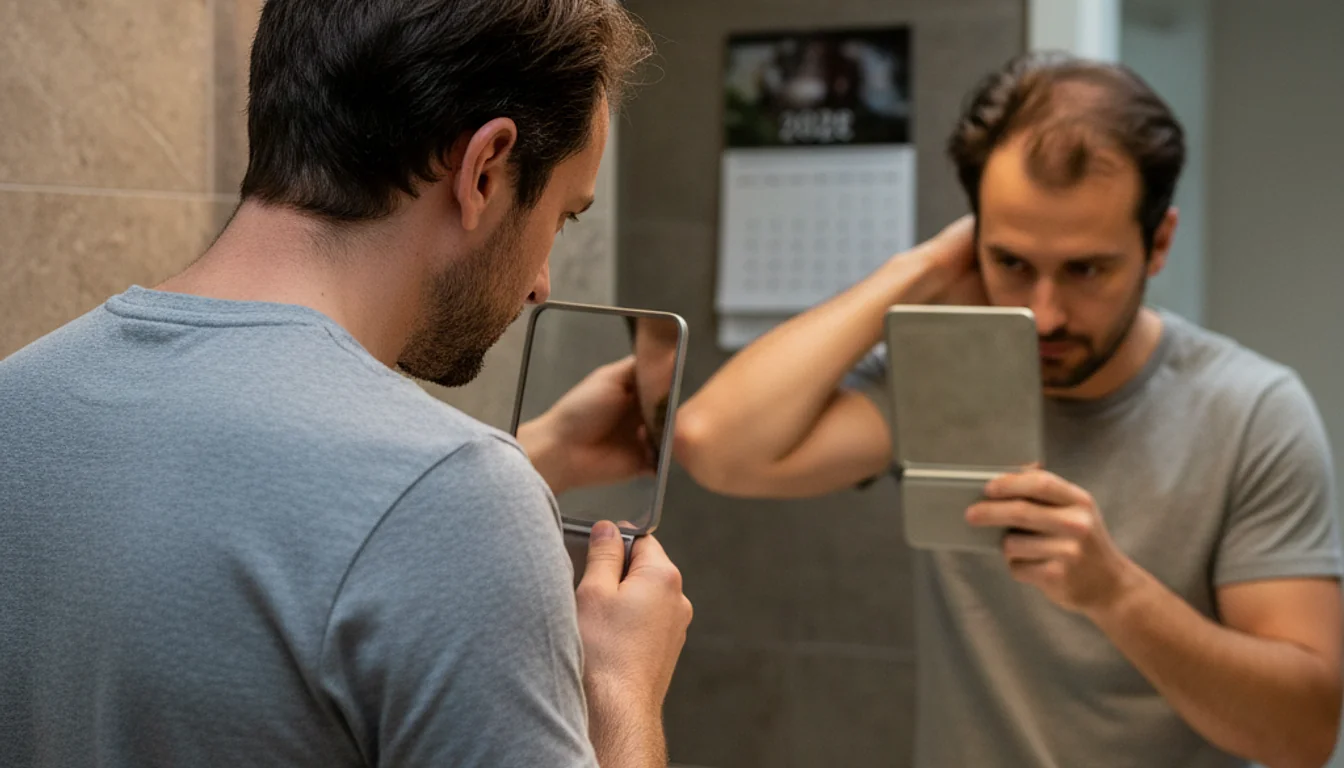
You finally get the body you want, you’re fitting into those slim-fit chinos you bought three years ago in a moment of delusional optimism, and then you look in the mirror. Your waist is smaller, but your forehead looks… larger? If you’ve been using weight loss injections, you’ve probably heard the whispers about hair loss glp1 side effects. It’s the trade-off nobody mentions in the flashy commercials. I’ve spent the last two years obsessing over my own hairline here in Los Angeles, and let me tell you, watching your hair go down the drain while your weight goes down on the scale is a special kind of mental torture.
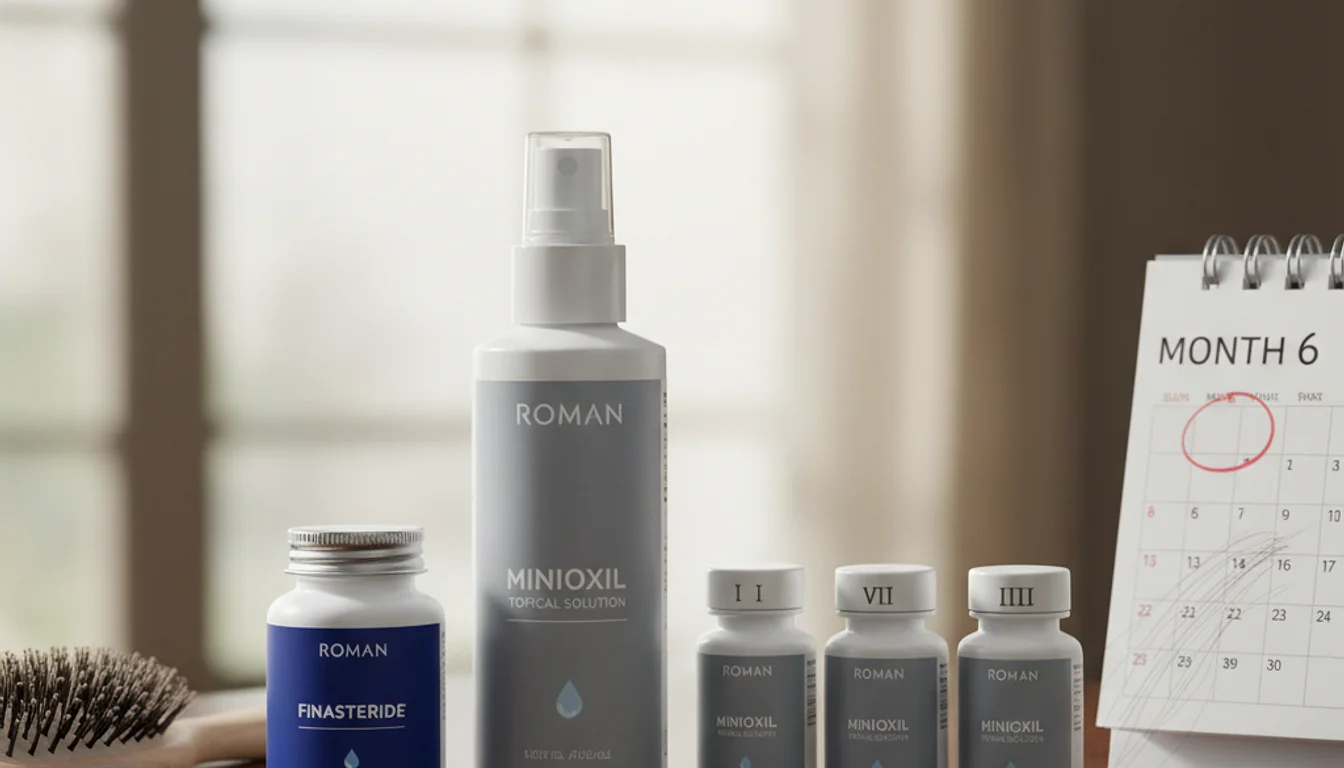
Hair loss from GLP-1 medications is usually a condition called telogen effluvium, which is essentially a “shock” to your system caused by rapid weight loss rather than the drug itself. To stop it, you need to prioritize protein intake, manage your micronutrients, and use a proven DHT blocker like Roman’s topical finasteride to protect your follicles during the transition. I personally saw my hairline stabilize and fill back in after six months of using Roman’s customized spray while maintaining my fitness goals.
The Day I Realized My Friend Mark Was Balding Faster Than He Was Losing Weight
Last Tuesday, I was sitting at a juice bar in Silver Lake with my buddy Mark. Mark’s been on a GLP-1 journey since early 2025, and he looks incredible. He’s down 40 pounds, his energy is up, and he’s finally stopped complaining about his knees. But as the sun hit his head at just the right angle, I saw it. His crown was thinning. Fast. He caught me looking, sighed, and said, “It’s the Ozempic, isn’t it?”
He told me he was losing clumps in the shower every morning. He was terrified. He’d spent $1,200 a month on the meds and now felt like he had to choose between being fit or being bald. It reminded me of my own 3 AM panic sessions back in 2023 when I was researching hair transplants in Turkey because I thought my genetics had finally won. I told him what I’m telling you: you don’t have to choose. But you do have to be proactive. If you’re curious about the specifics of these meds, you should check out Weight Loss Injections 2026: Do They Cause Hair Shedding? for the full breakdown.
Why Does Your Scalp Panic When You Lose Weight?
It’s not actually the GLP-1 molecule attacking your hair. Your body is just a bit of a drama queen. When you drop weight rapidly—which is exactly what these meds are designed to do—your body perceives it as a period of high stress or “famine.” To save energy for vital organs like your heart and brain, it shuts down “non-essential” functions. Unfortunately, your hair is at the top of the non-essential list.

According to a 2024 study published in the journal Obesity Pillars, hair thinning was reported in about 6% of participants in clinical trials for semaglutide. The researchers noted that this wasn’t a direct chemical side effect but rather a result of telogen effluvium. That’s a fancy way of saying your hair follicles decided to take an unscheduled nap. The good news? It’s usually temporary. The bad news? If you already have male pattern baldness (like I do), that temporary shed can unmask permanent thinning that was already lurking beneath the surface.
The Nutritional Gap
When you’re on a GLP-1, you’re barely hungry. I’ve seen guys living on iced coffee and a single protein bar all day. Your hair needs amino acids, zinc, and iron to grow. If you aren’t hitting at least 0.8 grams of protein per pound of goal body weight, your hair is going to pay the price. I learned this the hard way when I tried a juice cleanse back in my graphic design days—I lost five pounds and gained a visible patch on my left temple. Never again.
The Roman Solution: How I Finally Stabilized My Scalp
I was skeptical of “online doctors” for a long time. I wasted so much money on caffeine shampoos that smelled like a Starbucks and biotin gummies that did nothing but give me expensive urine. But in early 2023, a friend told me about Roman. I took their free 2-minute quiz while waiting for a Zoom call to start. It was private, I didn’t need insurance, and the kit arrived in a discreet box that didn’t scream “HELP I’M BALDING” to my mailman.
I’ve been using their topical finasteride + minoxidil spray for over two years now. It’s a game-changer because the topical version targets the scalp directly, which means fewer worries about systemic side effects. By the six-month mark, my barber, Leo, at “The Cut” on Sunset, actually stopped mid-snip and asked, “What are you doing differently? Your crown is actually filling in.” That was the moment I knew I wasn’t just imagining it. If you want to see what that looks like, take a look at these Roman Hair Loss Kit Before and After: Real User Photos 2026.
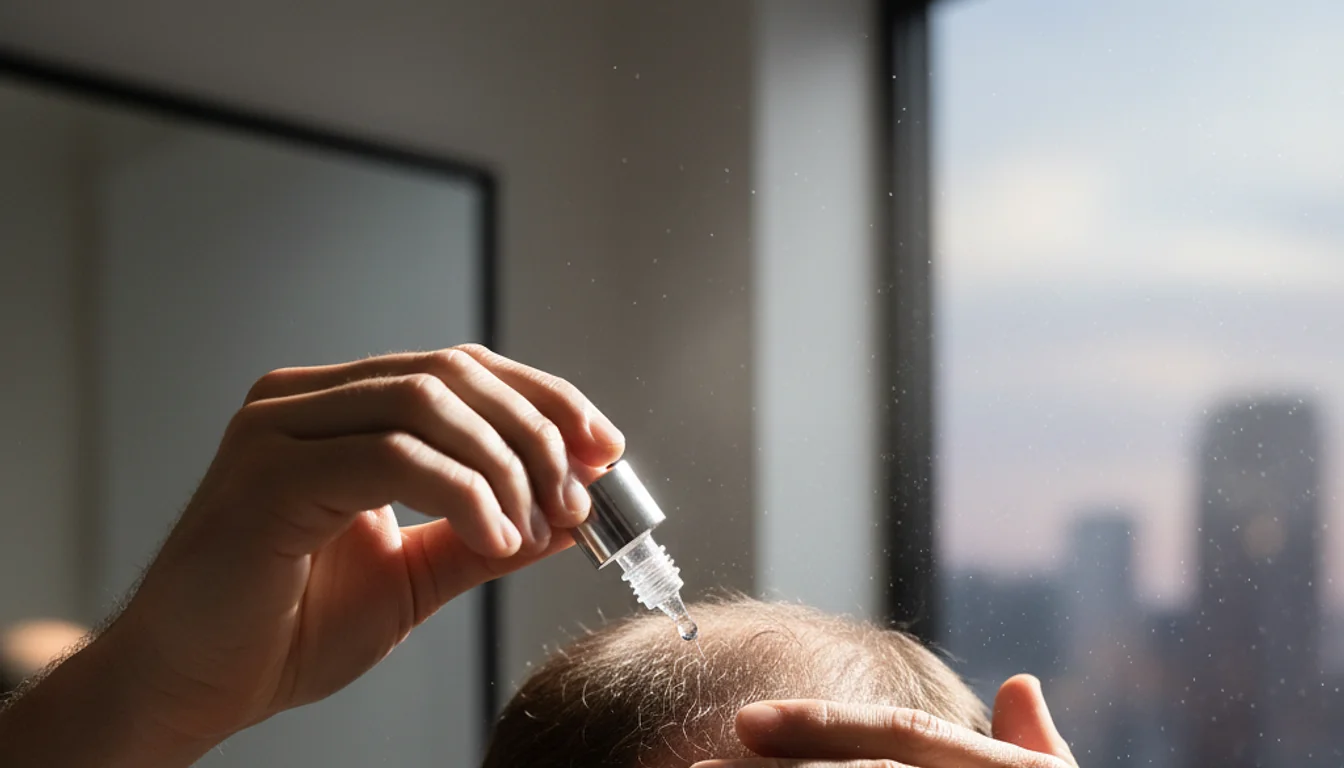
“I’m not a doctor—consult a licensed physician before starting any treatment. But as a guy who’s been in the trenches, the Roman quiz is the easiest first step you can take.”
3 Steps to Protect Your Hair While on a GLP-1
If you’re currently on a weight loss journey or planning to start one in late 2025, you need a defensive strategy. Don’t wait until you see your scalp through the bathroom mirror lights. By then, you’ve already lost about 30% of your hair density in that area.
- Prioritize Protein: Aim for 30-40 grams of protein at every meal. If you can’t eat that much, use a high-quality whey or collagen supplement. Check out my guide on High Protein Diet for Men’s Health and Thicker Hair for some easy meal ideas that don’t taste like cardboard.
- Get the Right Labs: Ask your doctor to check your ferritin (iron storage) and Vitamin D levels. Weight loss meds can sometimes lead to deficiencies that exacerbate hair shedding.
- Start a DHT Blocker Early: If you have hair loss glp1 concerns, don’t just wait for it to stop. Using a treatment from Roman can help keep your existing hair in the growth phase (anagen) longer, even while your body is stressed from weight loss.
What I Wish I Knew Sooner
I wish I hadn’t waited until I was 35 to take this seriously. I spent years wearing hats indoors—even at nice restaurants in Santa Monica—because I was self-conscious. I thought a hair transplant was my only hope, but those cost $10,000+ and involve a lot of downtime. My Roman subscription costs me about $30 to $50 a month depending on the current promotion, which is less than I used to spend on those useless supplements at the health food store.
Is Roman Worth It? My Honest Take
To be totally transparent: yes, I earn a commission if you use my links. But I’m a blogger, not a billionaire. I only recommend Roman because it’s what’s currently sitting in my bathroom cabinet. I use it every single night before bed. It’s not a miracle—it won’t give you a Fabio mane overnight—but it works if you’re consistent.
The biggest downside? You have to keep using it. If you stop, the progress fades. But honestly, I brush my teeth every day to keep them; I don’t mind spraying my scalp to keep my hair. The ease of the process is what won me over. No awkward waiting rooms, no “it’s just genetics” dismissals from a dermatologist who charges $300 for a ten-minute visit. Just a straightforward medical plan delivered to my door.
The Mental Game: Confidence vs. The Scale
Losing weight is supposed to make you feel better. But if you’re constantly checking the drain for hair, you aren’t going to enjoy your new body. I remember going to a pool party in West Hollywood last summer. For the first time in years, I wasn’t worried about my hair looking thin when it got wet. That feeling of not caring—of just being present—is worth every penny of the treatment cost.
If you’re struggling with the hair loss glp1 connection, realize that it’s a manageable hurdle. You’ve already done the hard work of taking control of your weight. Don’t let your hair be the reason you regret that progress. Take the quiz, get the facts, and keep your hair while you lose the weight. You’ve got this.
💬 Frequently Asked Questions
Now go try the quiz. Seriously. Right now.
Medical Disclaimer
This article is for informational purposes only and should not be considered as medical advice. The information provided does not constitute a recommendation to use any specific medication or treatment. Always consult with a qualified healthcare professional or licensed physician before starting any new health regimen or medication. Individual results may vary.