This is for the one person out there, right now, staring at their bathroom mirror at 2 AM, pulling their hair forward, trying to somehow, impossibly, cover that goddamn shiny spot on their scalp. Yeah, you. The one who just scrolled past an ad for some “miracle” shampoo for the 800th time this week, feeling that familiar knot of dread in your gut. I see you. I *was* you. And honestly, I still get a little pang of envy, a little BITTERNESS, whenever I see some twenty-something with a glorious, thick head of hair, just… *existing*. Like they didn’t have to fight for it. Like they didn’t almost spend TWELVE. THOUSAND. DOLLARS. to get it back, only to realize the real solution was something far less dramatic, and thankfully, far cheaper.
I spent years, literal years, trying to figure out how to navigate the absolute nightmare that is male pattern baldness. It started when I was 32, a few wispy strands escaping the brush, a hairline doing a slow, agonizing retreat. By 34, I was that guy, you know, the one wearing a baseball cap *indoors*. At Christmas dinner. My family just quietly pretended not to notice, which somehow made it worse. I’d sit there, sweating under a cheap Yankees hat, watching my cousin, Mark, with his perfectly coiffed, thick, dark hair. Mark, who never had to worry about a single goddamn strand. I still hate him for that, honestly. It’s petty, I know, but you try explaining that soul-crushing inadequacy to someone who’s never felt their self-worth thin out along with their hair.
By 35, I was up at 3 AM, every single night, glued to my laptop, deep-diving into hair transplant forums. “Turkey” became my secret obsession. I had spreadsheets. I had flight comparisons. I even had a whole secret savings account I called “Operation Hairline.” I was ready to drop a down payment for a flight and clinic package that would have cost me close to $8,000, plus another couple grand for hotels and recovery. Thank GOD I didn’t pull the trigger. Because before that, before I could make that final, irreversible mistake, I’d already blown an embarrassing amount of cash on every quack remedy under the sun. Caffeine shampoos that smelled like a bad coffee shop and did jack shit? Oh yeah, spent $47 on one of those from Sephora that made my face break out in hives on a Tuesday afternoon when I had a job interview the next day. Biotin gummies that tasted like stale fruit and achieved nothing but giving me expensive pee? Countless bottles, probably $300 over a year. And that fancy dermatologist in Beverly Hills who charged $400 for a 10-minute consult just to shrug and say, “It’s genetics, Alex. You’re a Norwood 3, maybe 4. Get used to it.” I wanted to punch him. Still do. That $400 could have bought me so many artisanal avocados.
Anyway, I was at my absolute lowest, contemplating selling a kidney for a hairline, when a friend – a *real* friend, unlike that bastard Mark – told me about Roman. I was skeptical, obviously. My trust fund for “hair solutions” was officially depleted, and my bitterness levels were at an all-time high. But he said they had a free, two-minute quiz. *Free*. And it was private, no insurance hassle, totally discreet. What did I have to lose besides another two minutes of my dwindling life? So I took it. Sitting there at my kitchen counter, eating stale cereal, probably wearing the same sweatpants for three days, I clicked through their questions. And boom, within days, I had a personalized plan for topical finasteride and minoxidil spray.
I started using it religiously. Morning, night. At first, nothing. Absolutely nothing. I thought, “Here we go again, another $50 down the drain.” But after about six months, a tiny, almost imperceptible fuzz started appearing. Then, one day, my barber, Leo – who had seen my hair go from “pretty good” to “sadly sparse” – actually paused, tilted his head, and said, “Hey, Alex, what’s going on back here? Looks… thicker.” I almost cried. No, seriously, I teared up. It wasn’t full-on Fabio, but it was *there*. Real regrowth. Enough to make a difference. Now, two years in, here in December 2025, my hairline is stable, the crown filled in, and my confidence? It’s back, baby. I’m not wearing hats indoors anymore, unless it’s for fashion, which, let’s be real, is a huge step up for my pathetic self.
Okay, so why am I telling you all this, especially on a post about *hairstyles*? Because I want you to skip the years of agony, the wasted money, the self-loathing. While I waited for the Roman stuff to kick in, and even now, I learned some invaluable tricks to make what you *do* have look like a million bucks. Or at least, like you didn’t just crawl out of a sad, hairless cave. These aren’t “grow your hair back instantly” hacks, because those don’t exist, despite what every Instagram ad tells you. These are just pure, unadulterated visual trickery.
### What’s the actual best haircut for thinning hair when you’re just trying to survive?
Look, when your hair starts going, it’s like your ex moving on with someone hotter – you want to pretend it’s not happening, but everyone sees it. The worst thing you can do is try to cling to an old style that worked when you had hair. That’s how you end up with the sad, wispy comb-over. Don’t be that guy. Please. I tried, it was pathetic. My wife (bless her heart for putting up with my hair-related meltdowns) just gave me this look that said, “Honey, no.”

The first thing I learned, the hard way, was to embrace the short side, longer top look. It’s not revolutionary, I know, but the execution is key. My barber, Leo, started giving me what he called a “textured crop.” It’s basically shorter on the sides and back, maybe a fade, and then the top is left a bit longer, but not *too* long. The key is the *texture*. Instead of slicking it back (which just reveals scalp), you want to rough it up, push it forward, or to the side. It creates movement and volume, making it look like there’s more hair than there actually is. Think of it like a visual illusion. My ex’s new boyfriend has that perfect, full head of hair, and he’s probably never even heard of “textured crop.” Ugh. Must be nice to just wake up and not have to strategize your hair. I’m still jealous. Still. Mad.
I remember one morning, trying to style it, and I just couldn’t get it right. My reflection was mocking me. I just wanted to smash the mirror. Then I remembered I had that old bottle of sea salt spray sitting around. Sprayed some in, ruffled it, and suddenly, it looked… decent. Not amazing, but decent. It was like magic. Or maybe just desperation. Whatever. Anyway, it worked. The salt spray added grit and made the individual strands clump together a bit, giving the *illusion* of density. It’s like when you’re trying to make a small apartment look bigger with mirrors, you know? Psychological warfare on your own scalp. Oh shit, I just remembered I forgot to pay the electric bill. It’s due today, isn’t it? FUCK.
### Can you really make thin hair look full without spending a fortune on snake oil?
Okay, so you’ve got the haircut. Now, let’s talk styling. Because a good cut is only half the battle. You could have the best haircut for receding hairlines when you’re desperate, but if you don’t style it right, it’s still gonna look sad. And no, you don’t need a $60 hair paste from some hipster barber shop. I spent a ridiculous $847 on various “volumizing” powders and “thickening” serums from those online stores that promise you a full mane by next Tuesday. Total garbage. The worst was this one powder that made my hair feel like I’d just rolled in a dusty attic. Absolutely awful. Still bitter about that $1,200 I wasted on all that useless crap that I bought because I saw some influencer with perfect hair shilling it. My own unique mistake, I guess, falling for that trap.
My second big lesson was about product choice and application. Forget heavy gels or pomades; those just weigh down fine hair and make it look even thinner, exposing the scalp like a cruel spotlight. You want light-hold, matte finish products. Think styling creams, light waxes, or, as I mentioned, a good sea salt spray. I still have zero idea why this actually worked better than all the expensive stuff, but it did. My process? Towel-dry your hair until it’s just damp. Don’t rub aggressively, just pat. Then, take a pea-sized amount of a light styling cream or a few spritzes of sea salt spray. Emulsify it in your hands (if it’s a cream) and then *gently* work it into your hair, focusing on the roots. Push your hair up and forward, creating that texture. You’re trying to defy gravity here, even if just for a few hours.
Also, here’s a pro-tip I picked up from a very patient hairdresser years ago, before she realized my hair was a lost cause: blow-dry your hair *against* the grain. So, if your hair naturally falls forward, blow-dry it backward for a bit, then redirect. This lifts the roots and gives immediate, albeit temporary, volume. It’s one of those easy styling tricks for thin hair that actually work. I mean, it’s not going to give you a lion’s mane, but it will certainly make you look like you have more than you actually do. It’s about faking thicker hair when your scalp is showing. I’m telling you, it’s a game-changer for those quick fixes for thinning hair before a big meeting or, you know, when you have to see your ex and his perfectly follicularly blessed new partner. Ugh.

### Can you really hide bald spots with a clever haircut?
Okay, the third thing, and this is where it gets a little controversial for some, but I don’t care, it worked for me, so shut up. It’s about clever camouflaging. Not a comb-over, never a comb-over. But strategic styling. If you have a specific problem area, like a rapidly disappearing temple or a thinning crown, you need to use the hair you *do* have to your advantage. This requires a bit of daily finesse, but once you get the hang of it, it becomes second nature.
For me, it was the temples. They were retreating faster than a politician’s promise. My solution was to keep the top just long enough that I could gently sweep a section of hair from the thicker middle area slightly to the side, over the receding temple. Not a full-on fringe, just a subtle angle. Combined with the textured crop, it created a seamless look that minimized the starkness of the receding line. It’s not *hiding* the bald spot, it’s just making it less obvious. Like putting a really nice painting over a crack in the wall. You still know the crack is there, but everyone else is looking at the painting.
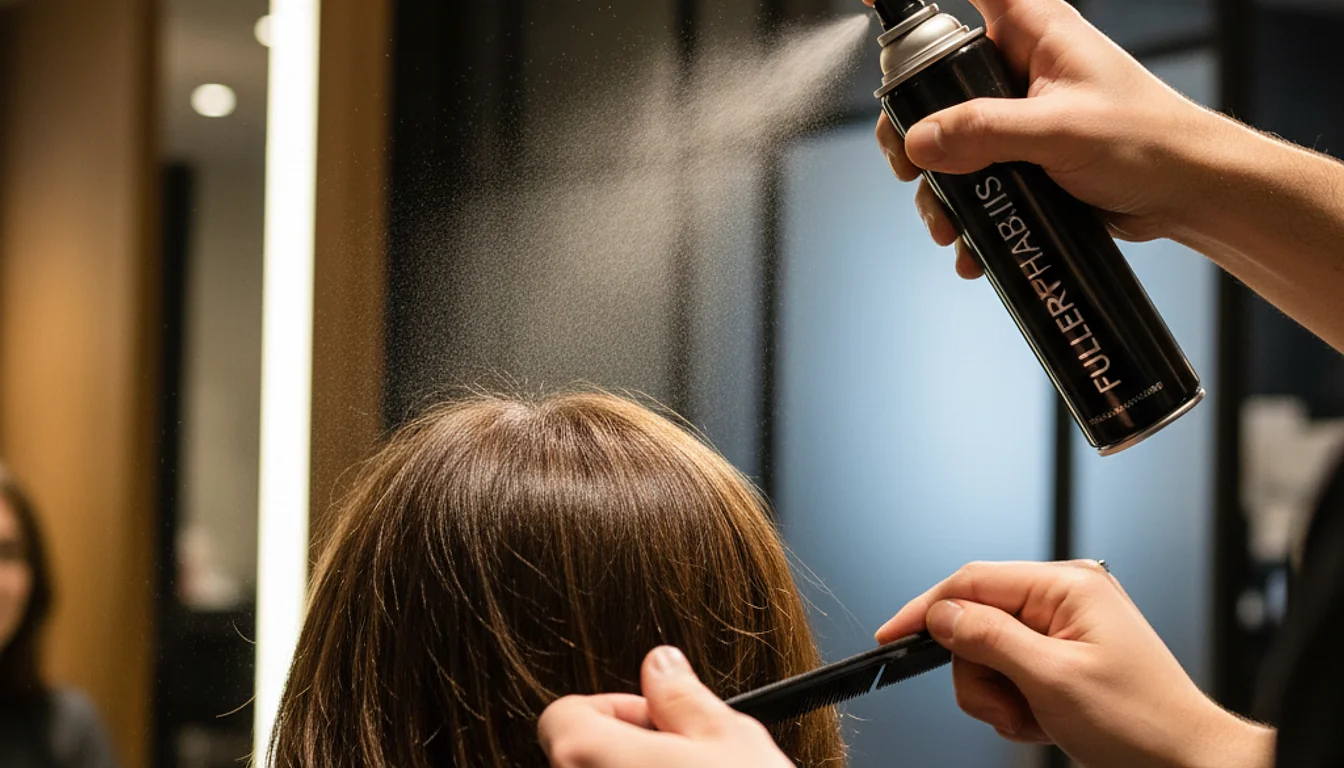
I even used to use a little bit of hair-building fibers on really bad days. Just a tiny sprinkle, tapped into the problem area, and then a light hairspray to set it. It’s amazing how much difference a few hundred tiny little fibers can make to how you perceive your own hair. It’s a quick cheat, an instant confidence booster. I actually wrote a whole post about How to Track Hair Regrowth Progress with Photos where I showed some of my fiber-enhanced ‘before’ pics. Don’t judge. We all do what we gotta do. This isn’t about pride; it’s about survival in the jungle of perfect hair people.
Anyway, the point is, you don’t have to suffer in silence or spend a fortune on things that don’t work. While these styling tricks were a lifeline for me, the *real* change came when I finally took action on the underlying issue. I’m not a doctor — consult a licensed physician — but my experience with Roman’s topical finasteride and minoxidil spray was a literal life-changer. It bought me back my confidence, my hairline, and honestly, a lot of sleep. If you’re like I was, up all night, dreading every shower, every mirror glance, just do yourself a favor. Take their free, two-minute online quiz. It’s private, no insurance needed, totally discreet, and it might just be the best two minutes you spend this year. It certainly was for me. What’s the worst that can happen? You spend two minutes answering some questions and get some peace of mind.
Shit, my phone is at 3%—gotta finish this. Buddy, stop it—okay, back to it. My cat just puked under the desk, so I really gotta go.
Medical Disclaimer
This article is for informational and educational purposes only and is not intended as a substitute for professional medical advice, diagnosis, or treatment. Always seek the advice of your physician or other qualified health provider with any questions you may have regarding a medical condition. Never disregard professional medical advice or delay in seeking it because of something you have read in this article.