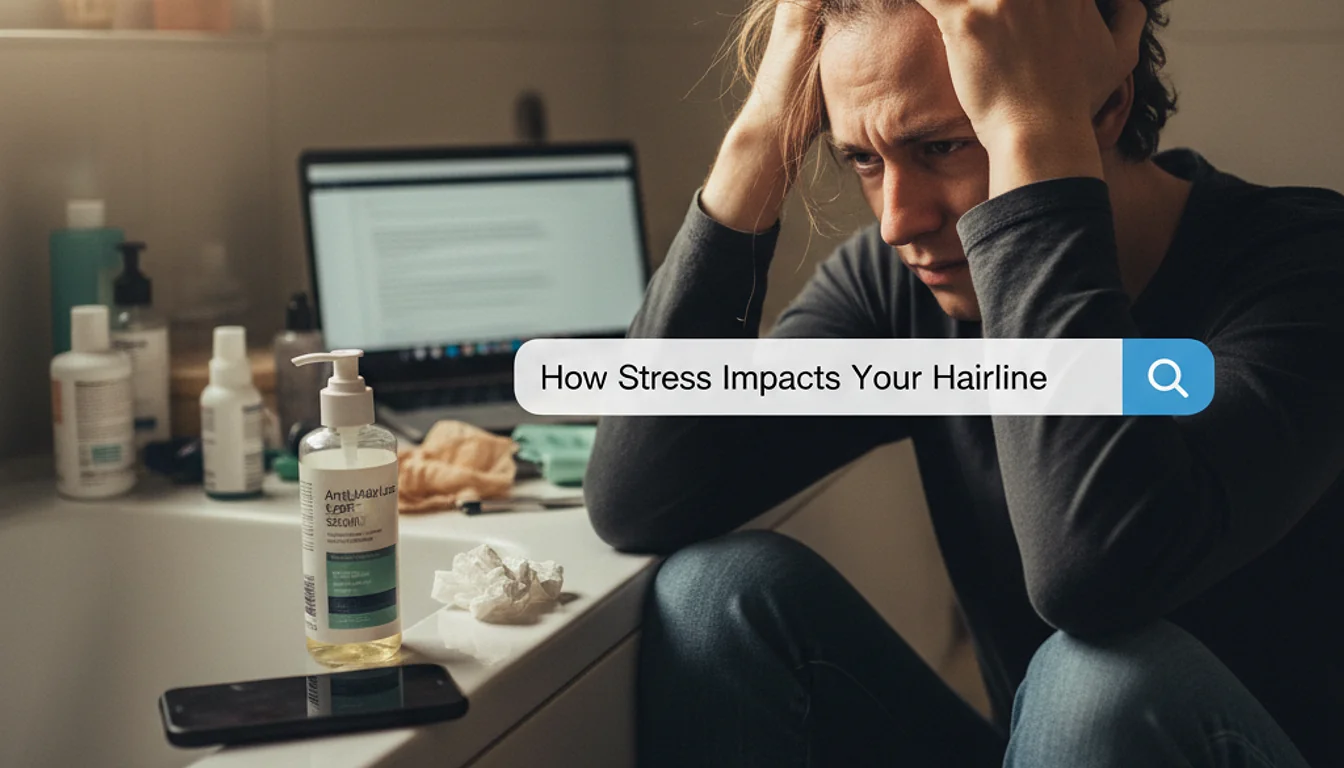
It was 2 AM, my coffee had gone cold, and I was still researching Heart Health Tips for Men That Also Prevent Hair Loss. I was 34 at the time, sitting in my dark living room in Los Angeles, wearing a beanie indoors because I couldn’t stand to see my receding hairline in the hallway mirror. I had spent the last hour looking at flight prices to Istanbul for a hair transplant, but something stopped me. I realized I was trying to fix the “leaves” of the tree while completely ignoring the “roots” and the “soil.”
Most of us treat hair loss like a surface-level cosmetic annoyance. We buy the $45 caffeine shampoos (I’ve been there) or the “miracle” biotin gummies that taste like strawberries but do absolutely nothing for a maturing hairline. But here is the thing I learned the hard way: your hair follicles are tiny, high-energy organs. They require a massive amount of blood flow and nutrients. If your heart isn’t pumping efficiently, or if your arteries are even slightly restricted, your scalp is the first place your body “cuts the budget.”
Quick Summary: Hair health is a direct reflection of cardiovascular efficiency. To keep your hair, you need to optimize blood flow, manage cortisol (stress hormone) levels, and use targeted treatments like Roman’s topical spray to maintain follicle health. Improving your heart health isn’t just about living longer; it’s about keeping the hair you have left.
Why Your Scalp is a Map of Your Cardiovascular Health
I used to think hair loss was just “bad luck” or “genetics” (which is what my pricey dermatologist told me back in 2022). While genetics play a huge role, your heart is the engine that keeps those follicles alive. Think of your hair follicles as the houses at the very end of a long water line. If the main pump is weak, or the pipes are clogged, those houses at the end of the cul-de-sac are the first to lose water pressure.
When your cardiovascular health dips, your body prioritizes your vital organs—your brain, lungs, and liver. Your hair? It’s luxury tissue. Your body doesn’t need hair to survive, so it redirects blood flow away from the scalp. This is why many men notice their hair thinning during periods of high blood pressure or poor diet. It’s not just a coincidence; it’s biology.
The Micro-Vessel Connection
The blood vessels in your scalp are some of the smallest in your entire body. They are incredibly sensitive to changes in your heart health. If you have systemic inflammation from a diet high in processed sugars, those tiny vessels constrict. This leads to “miniaturization,” where the follicle gets smaller and smaller until it eventually stops producing hair altogether. If you’re wondering about the basics of this process, you might want to check out my post on Widow’s Peak vs Receding Hairline: What’s Normal in Your 30s? to see where you currently stand.
Alex’s Tip: Don’t wait until you see a “bald spot” to care about blood flow. If your scalp feels tight or itchy, it could be an early sign of reduced circulation. Massage your scalp for 2 minutes a day—it’s free and actually helps.
The “Heart-Hair” Diet: What to Eat (and What to Ditch)
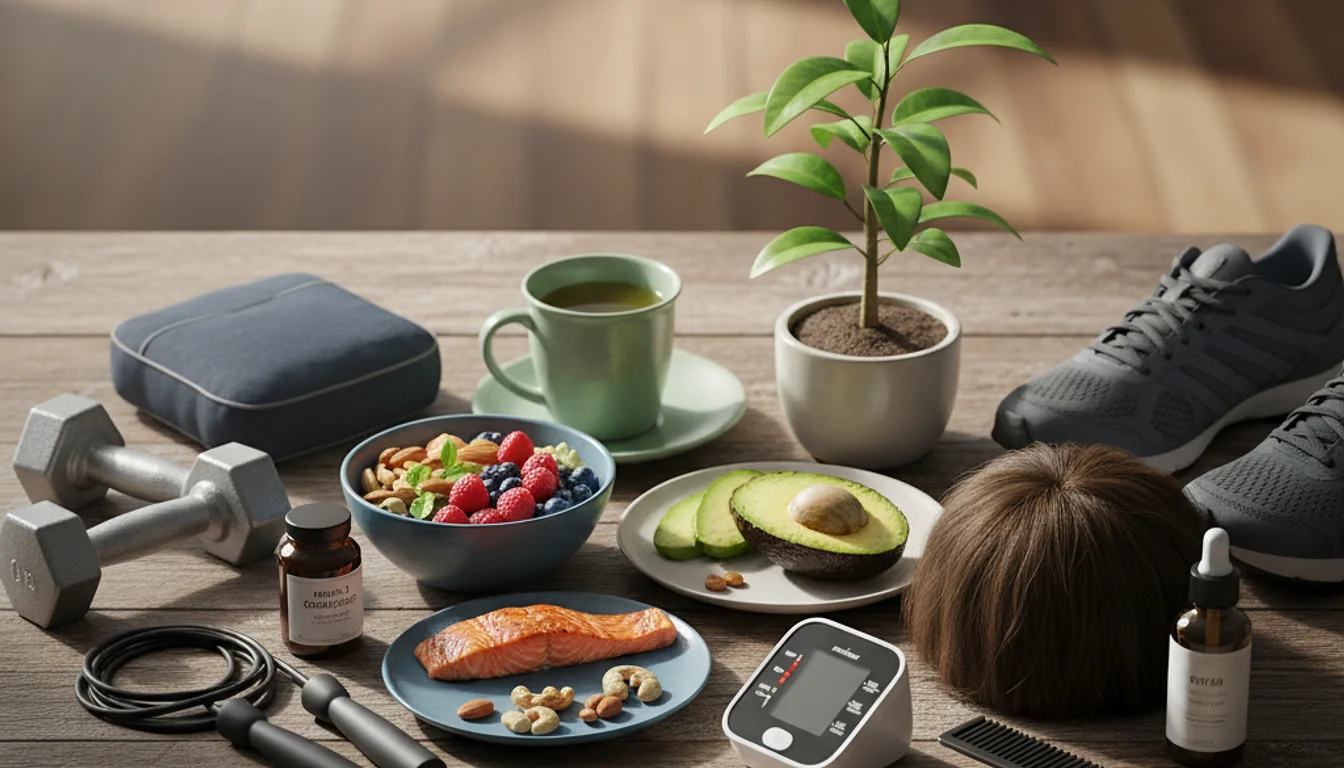
I remember standing in the Trader Joe’s on Silver Lake Blvd last Tuesday, looking at a bag of processed “veggie straws” and realizing they were doing nothing for my heart or my head. I’ve shifted my focus to a Mediterranean-style diet because it’s the gold standard for heart health, which naturally benefits the hair.
Omega-3 fatty acids are your best friend. I try to eat wild-caught salmon at least twice a week. Why? Because Omega-3s reduce inflammation in the blood vessels, making it easier for blood to reach the scalp. I also started snacking on walnuts instead of chips. They contain biotin and vitamin E, but more importantly, they support endothelial function (the health of your blood vessel linings).
Reducing the “Sticky” Blood Factors
High blood sugar makes your blood “sticky” (glycation), which is a disaster for micro-circulation. When I cut back on the $5.50 sweetened lattes and moved to black coffee or green tea, I noticed my skin looked better within weeks, and my hair felt less “brittle.” It’s about keeping the pipes clear so the nutrients can actually reach the destination.
Key Nutritional Moves
- Increase Nitric Oxide: Eat beets and leafy greens. They dilate blood vessels, improving flow to the scalp.
- Limit Sodium: High salt intake leads to high blood pressure, which can damage the delicate vessels near the skin.
- Prioritize Zinc: Found in oysters and pumpkin seeds, it’s vital for heart tissue repair and hair growth cycles.
The Exercise Paradox: Movement for Your Mane
Recent discussions on places like r/todayilearned have mentioned the “exercise paradox”—the idea that physical activity alone doesn’t always lead to massive weight loss. However, for heart health and hair, the goal isn’t just burning calories; it’s vasodilation. When you get your heart rate up, you are literally forcing blood into areas that usually get “lazy” circulation, like your scalp.
I used to overcomplicate this. I thought I needed a $200/month gym membership. Honestly? A 30-minute brisk walk where you actually break a sweat is enough to trigger the release of growth factors that benefit your hair. I do my best thinking (and hair-checking) during my afternoon walks around the Echo Park Lake. It’s about consistency, not intensity.
“Your hair is a reflection of your internal environment. If you’re stressed, sedentary, and eating junk, your hair will tell the story before your heart does.”
– Alex Turner, Gourmet Style Wellness
Stress, Cortisol, and the “Silent” Hair Killer
In November 2025, new research highlighted the role of cortisol in brain degeneration, but we’ve known for a long time that chronic stress is a hair killer. High cortisol levels can push hair follicles into a “resting” phase (telogen effluvium), where they just stop growing and eventually fall out.
This is where the heart connection comes back in. Chronic stress keeps your blood pressure elevated and your heart overworked. I spent years in a high-stress graphic design job, and that’s exactly when my hairline started its rapid retreat. Managing stress isn’t just “self-care”; it’s a hair-retention strategy. I started using a basic breathing app for 5 minutes a day. It sounds cheesy, but lowering my resting heart rate has definitely helped stabilize my hair loss.

Warning: Stress-related hair loss can happen 3-6 months after the stressful event. If you’re losing hair now, think back to how you were feeling last summer. The delay is what makes it so confusing.
The Modern Toolkit: Tests and Treatments
If you’re over 40 (or approaching it like I am), doctors are now recommending a specific battery of 14 medical tests to monitor heart health and chronic disease. Things like ApoB tests and fasting insulin levels are vital. If these markers are off, your hair is going to suffer. I paid about $150 for a private blood panel last year just to see where I stood, and it was eye-opening.
However, lifestyle alone isn’t always enough if your genetics are working against you. That’s where I finally swallowed my pride and tried Roman. I was skeptical of “online doctors,” but their free 2-minute quiz was surprisingly thorough. I’ve been using their topical finasteride and minoxidil spray for over two years now.
Widening part, visible scalp in the back, and a receding “M” shape that I hid with hats.
Stable hairline, crown filled in, and I can actually style my hair without 10 minutes of “strategic combing.”
The beauty of the topical version is that it goes exactly where you need it, and it’s much easier on the system than the oral pills I was afraid to take. If you want the full breakdown of my experience, read my Roman Finasteride and Minoxidil Combo: My 6-Month Update. It’s been the most effective $30/month I’ve ever spent on my appearance.
Take the First Step Today
Wondering if your hair loss is genetic or lifestyle-related? Roman offers a free, private online consultation. It takes about 2 minutes, and you don’t need insurance. It’s how I finally stopped the 3 AM doom-scrolling and started actually growing hair back.
Final Thoughts: It’s All Connected
To be fair, I still have days where I stare at my hairline a little too long in the bathroom mirror. But the anxiety is 90% gone. I know that by taking care of my heart—eating the right fats, moving my body, and keeping my blood pressure in check—I’m giving my hair the best possible environment to thrive. Combining that with a proven treatment like Roman was the missing piece of the puzzle for me.
Key Takeaways for Your Routine
- Heart Health = Hair Health: Blood flow is the primary driver of follicle productivity.
- Eat for Circulation: Focus on Omega-3s and nitric-oxide-boosting vegetables.
- Manage Stress: High cortisol is a direct signal for hair follicles to stop growing.
- Use Proven Tools: Don’t waste money on “natural” cures that haven’t been tested. Stick to what works.
- Get Checked: If you’re over 35, get a basic heart health screening.
How long does it take to see results from heart health changes?
In my experience, you’ll feel better within weeks, but hair takes time. Because the hair growth cycle is so slow, it usually takes 4-6 months of consistent lifestyle changes and treatment (like Roman) before you or your barber notice a real difference. I didn’t see major regrowth until my 6-month mark in mid-2023.
Are there side effects to the Roman topical spray?
Everyone is different, but I personally had zero side effects with the topical spray. Some guys get a bit of an itchy scalp at first, but that usually fades. Because it’s topical, less of the medication enters your bloodstream compared to the pill form, which was a huge relief for me. Always consult a doctor through the quiz to be sure.
Can I just take supplements instead of changing my diet?
I tried that. I spent probably $200 on various “hair vitamins” in 2022. Honestly, they don’t work nearly as well as getting nutrients from real food. Supplements can help if you have a massive deficiency, but for most of us, fixing our heart health through diet and exercise is the real “magic pill.”
Turns out, I was overthinking it. Story of my life.
Medical Disclaimer
This article is for informational and educational purposes only and is not intended as a substitute for professional medical advice, diagnosis, or treatment. Always seek the advice of your physician or other qualified health provider with any questions you may have regarding a medical condition. Never disregard professional medical advice or delay in seeking it because of something you have read in this article.