73% of people have no idea what they’re doing with a Skin Care Routine for Men with Thinning Hair. I know that because I was part of that statistic for years, staring at the Walgreens shelf on Sunset Blvd at 11:30 PM, wondering if a $14 face wash would somehow make my receding hairline look less like a cry for help. A proper skin care routine for thinning hair involves protecting the newly exposed scalp with broad-spectrum SPF 30+, using salicylic acid cleansers to remove DHT-clogged sebum, and applying lightweight moisturizers to prevent the “shiny head” effect while supporting hair regrowth treatments like topical finasteride.
Quick Summary: If your hair is thinning, your scalp is now “face skin.” You need to prioritize daily sun protection (SPF 30+), gentle exfoliation to prevent follicle clogging, and a consistent hair regrowth protocol. I personally use Roman’s topical spray because it combines my “skin” treatment and “hair” treatment into one 2-minute habit.
The Day I Realized My Scalp Was Actually Just More Forehead
Back in early 2023, I was at a rooftop bar in West Hollywood. It was one of those rare clear L.A. days where the sun actually feels like it’s trying to cook you. A friend took a photo of the group, and when I saw it later, I didn’t even recognize the guy in the back. My forehead didn’t end where it used to; it just sort of.. kept going. And it was bright red.
That sunburn was a wake-up call. I’d spent thousands on biotin gummies and “thickening” shampoos that did nothing, but I was completely ignoring the actual environment where my hair was supposed to grow: my skin. When your hair thins, your scalp is suddenly exposed to UV rays, pollution, and sweat in a way it never was before. If that skin is inflamed, burnt, or clogged with oil, your chances of regrowth are basically zero.
I finally stopped listening to the “it’s just genetics” crowd and started treating my scalp like the high-end real estate it is. It took some trial and error (and one very embarrassing incident with a greasy sunscreen that made me look like a glazed donut), but I finally dialed in a routine that works.
“Alex, your scalp looks healthier than your face used to. Whatever you’re doing, keep it up because the new growth actually has a place to land now.”
– My barber, Marcus, after 6 months on my new routine
Step 1: Cleansing Without Stripping the “Canvas”
Most guys use the same harsh bar soap on their head that they use on their armpits. Please, for the love of your remaining follicles, stop doing that. When hair thins, the sebaceous glands in your scalp can actually go into overdrive, producing more oil (sebum) to protect the exposed skin. This oil contains high concentrations of DHT (dihydrotestosterone), the hormone primarily responsible for male pattern baldness.
According to a 2019 study published in the Journal of Investigative Dermatology, scalp micro-inflammation is a significant factor in the progression of androgenetic alopecia. If you aren’t cleaning that skin properly, you’re literally letting inflammation-causing oils sit on your roots.
What to Look For in a Scalp Cleanser
- Salicylic Acid (0.5% – 2%): This is a beta-hydroxy acid that gets deep into the pores to dissolve oil. I use a specific one I found for $23.47 that’s technically a face wash, but it works wonders on the hairline.
- Ketoconazole: While technically an anti-fungal, many guys (including me) find that 1% ketoconazole shampoos help reduce scalp inflammation.
- Sulfate-Free: You want to remove oil, not strip your skin’s natural barrier. If your scalp feels “tight” after washing, your cleanser is too harsh.
Pro Tip: Spend at least 60 seconds massaging your cleanser into your scalp with your fingertips (not nails). This increases blood flow—essential for nutrient delivery to the hair bulb.
Step 2: The Critical Importance of Sun Protection
This is the part 73% of us miss. UV radiation doesn’t just cause skin cancer; it causes “photoaging” of the scalp. A 2023 report from the Skin Cancer Foundation notes that the scalp is one of the most common sites for skin cancers in men, often because it’s overlooked until it’s too late. Beyond the health risks, sun damage breaks down collagen. Since your hair follicles live in a collagen-rich environment, sun damage literally “shrinks” the space your hair has to grow.
I used to hate sunscreen because it made my thinning hair look greasy and clumped together. Then I discovered mineral-based powder sunscreens and matte-finish fluids. I currently use a matte fluid SPF 50 that cost me exactly $31.42 at a boutique pharmacy, and it’s been a game-changer. It disappears into the skin and actually helps soak up mid-day forehead shine.
Warning: Never use “sport” spray sunscreens directly on a thinning scalp unless you’re okay with looking like you’ve been dipped in vegetable oil. They are too heavy and will clog your follicles instantly.
Step 3: Integrating Your Hair Loss Treatment
A skin care routine for men with thinning hair isn’t complete without the “active” ingredient that actually stops the loss. For me, that’s Roman. After years of wasting money on caffeine shampoos that smelled like a Starbucks but did nothing, I finally got serious in early 2023.
I was skeptical about the whole “telehealth” thing, but the 2-minute quiz was free and way less awkward than sitting in a dermatologist’s waiting room. I ended up on their topical finasteride and minoxidil spray. Because it’s a spray, it fits perfectly into my skin care routine. I apply it right after I dry my hair, before I put on any moisturizer or SPF.
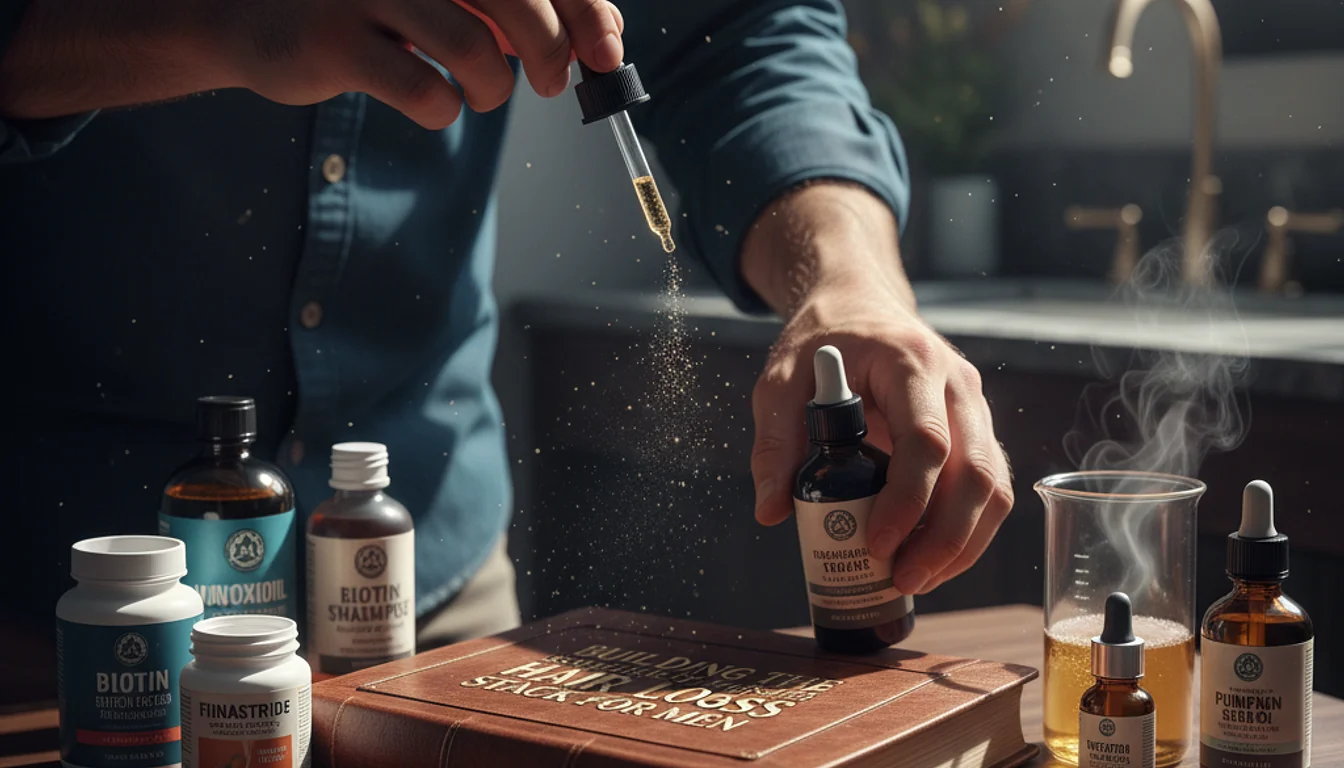
If you’re curious about how this specific treatment fits into a larger strategy, you might want to check out my guide on Building the Perfect Hair Loss Stack for Men. It’s not just about one product; it’s about how they all play together.
Stop Guessing About Your Hair
I wasted three years on “natural” remedies that didn’t work. Don’t be like me. Take the Roman quiz—it’s private, no insurance is needed, and it’s the fastest way to see what a licensed physician actually recommends for your specific thinning pattern.
Step 4: Moisture Without the Shine
One of the biggest complaints I hear from guys with thinning hair is the “shiny scalp” look. When the skin is dry, it reflects light more intensely. By keeping the scalp hydrated with a lightweight, non-comedogenic moisturizer, you actually create a more “matte” and healthy appearance.
Look for ingredients like Niacinamide (Vitamin B3). According to a study in the British Journal of Dermatology, niacinamide improves the skin barrier and can help regulate oil production. I apply a niacinamide serum every morning ($18.90 from a brand I trust) and it has significantly reduced the redness I used to get along my receding hairline.
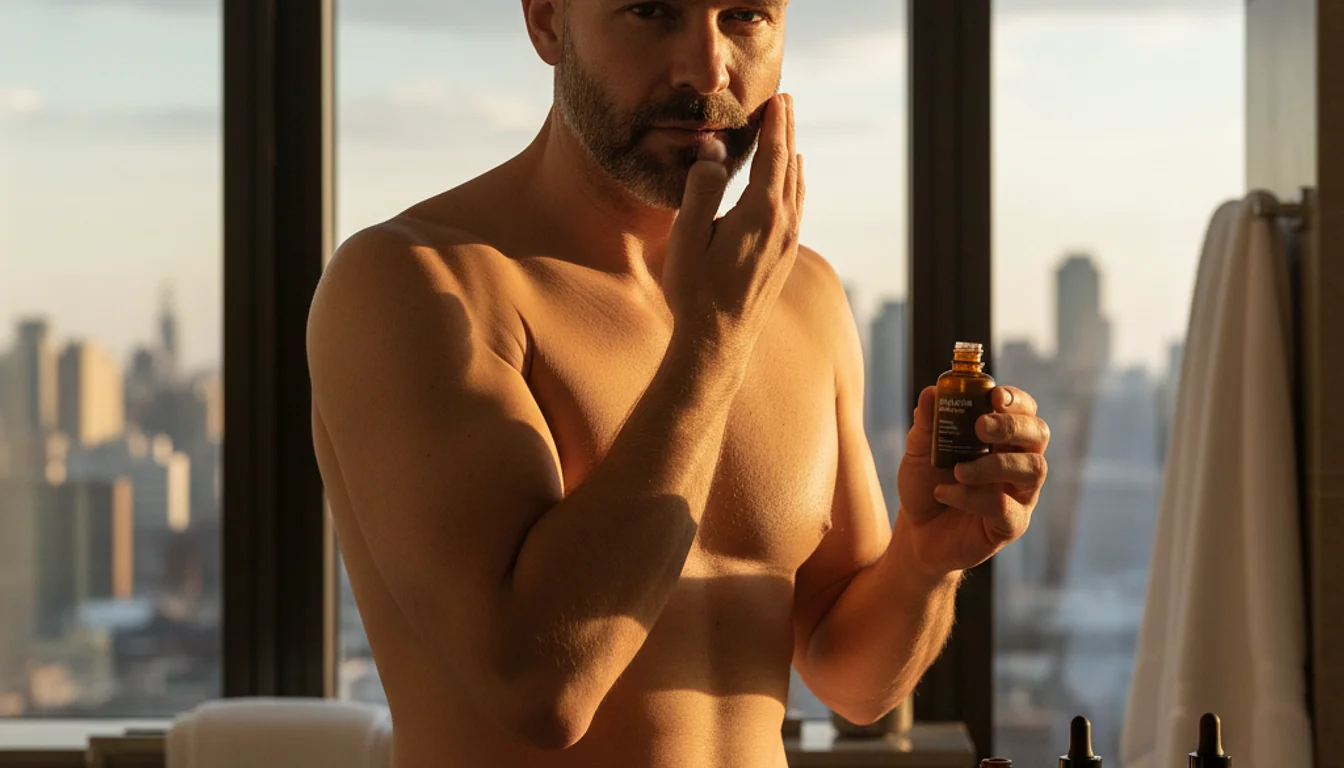
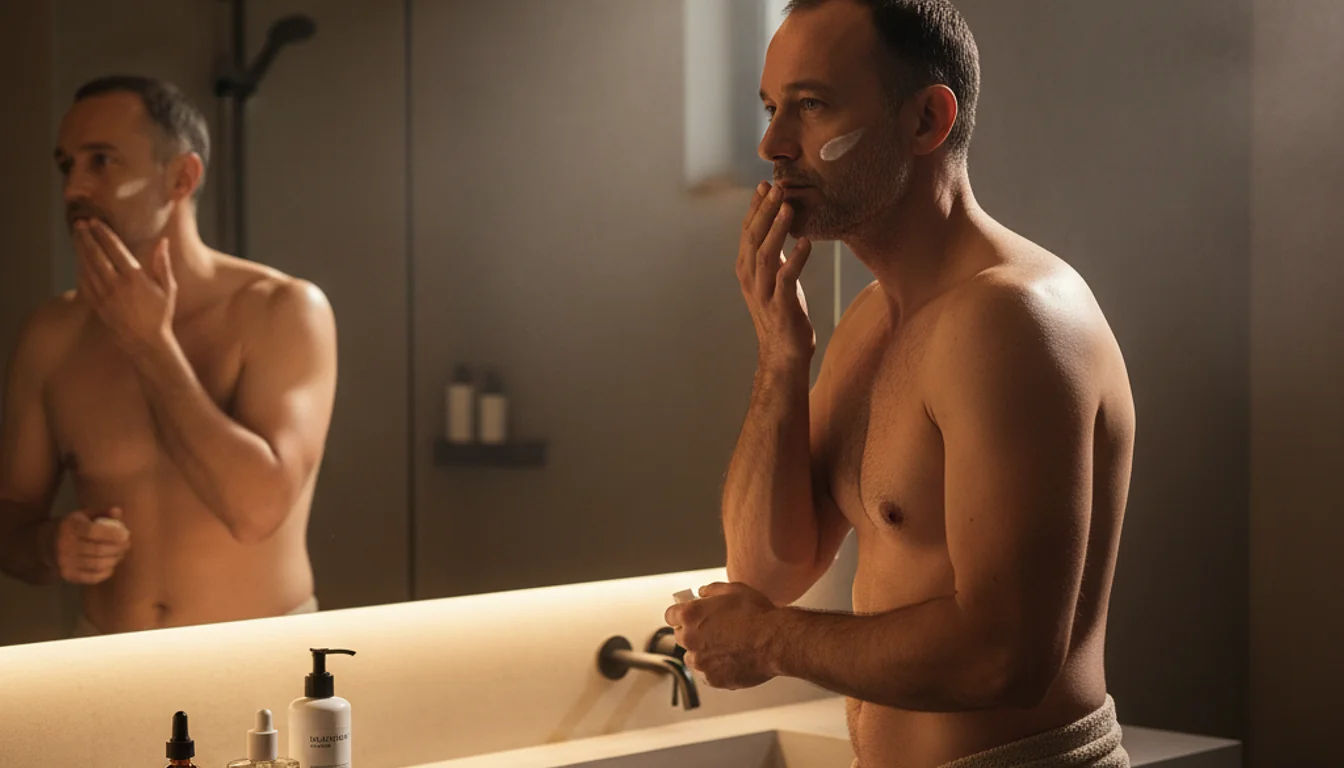
My Daily 5-Minute Routine
Cleanse
Use a salicylic acid wash in the shower. Focus on the hairline and crown where oil builds up.
Treat
Apply Roman Topical Finasteride/Minoxidil spray to the thinning areas. Let it dry for 60 seconds.
Hydrate
Apply a pea-sized amount of niacinamide serum to the entire scalp/forehead area.
Protect
Finish with a matte-finish SPF 30+. This is the most important step—don’t skip it.
What I Wish I Knew Before I Started
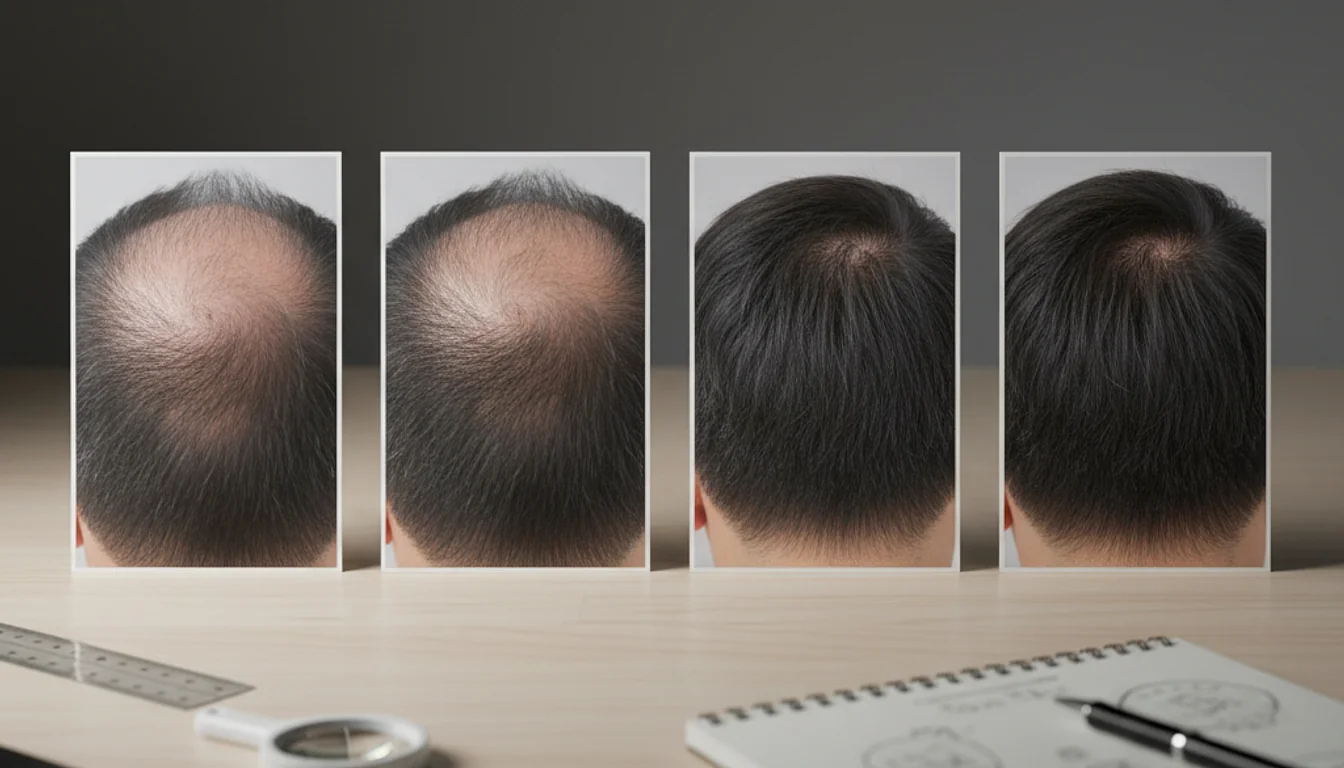
I’m not going to lie to you—the first month of actually taking care of my scalp skin was annoying. I felt like I was doing “too much.” But then, around the 3-month mark, I noticed something. The dandruff I’d had since college? Gone. The itchy, tight feeling after a day in the sun? Gone. And most importantly, when I looked at my Roman Finasteride and Minoxidil Combo: My 6-Month Update, the new hairs were actually staying. They weren’t falling out because the “soil” (my skin) was finally healthy enough to support them.
I also learned that consistency is more important than price. You don’t need a $200 cream. You need a $20 sunscreen that you actually use every single day. I’ve spent roughly $65 a month on my total “head” routine (including my Roman subscription), and the ROI on my confidence has been immeasurable. For more on the long-term expectations, check out Roman Hair Loss Results Men Over 40: What to Expect.
Key Takeaways
- The Scalp is Face Skin: Treat it with the same respect (cleanse, hydrate, protect).
- DHT Lives in Sebum: Regular exfoliation with salicylic acid helps remove the oil that carries hair-killing hormones.
- SPF is Mandatory: UV damage destroys the collagen your follicles need to thrive.
- Combine Routines: Integrate your medical treatments (like Roman) into your skin care steps for better consistency.
Frequently Asked Questions
Will skin care products clog my hair follicles and cause more hair loss?
In my experience, it’s actually the opposite. Using heavy, greasy products (like thick pomades or “sport” sunscreens) can definitely clog follicles, a condition called folliculitis. However, using “non-comedogenic” (pore-clearing) products like salicylic acid and lightweight serums actually helps keep the follicles open and healthy. I’ve found that my hair treatments absorb much better since I started exfoliating my scalp skin twice a week.
Can I just use my regular face wash on my thinning scalp?
Yes, absolutely. That’s exactly what I do. As my hairline moved back, I just started moving my face wash routine further up. The skin on your forehead is very similar to the skin on your scalp. If a product is gentle and effective enough for your face, it’s usually great for your thinning areas. Just avoid anything with heavy oils or “shimmer” particles unless you want a very shiny head.
How long before I see a difference in my scalp health?
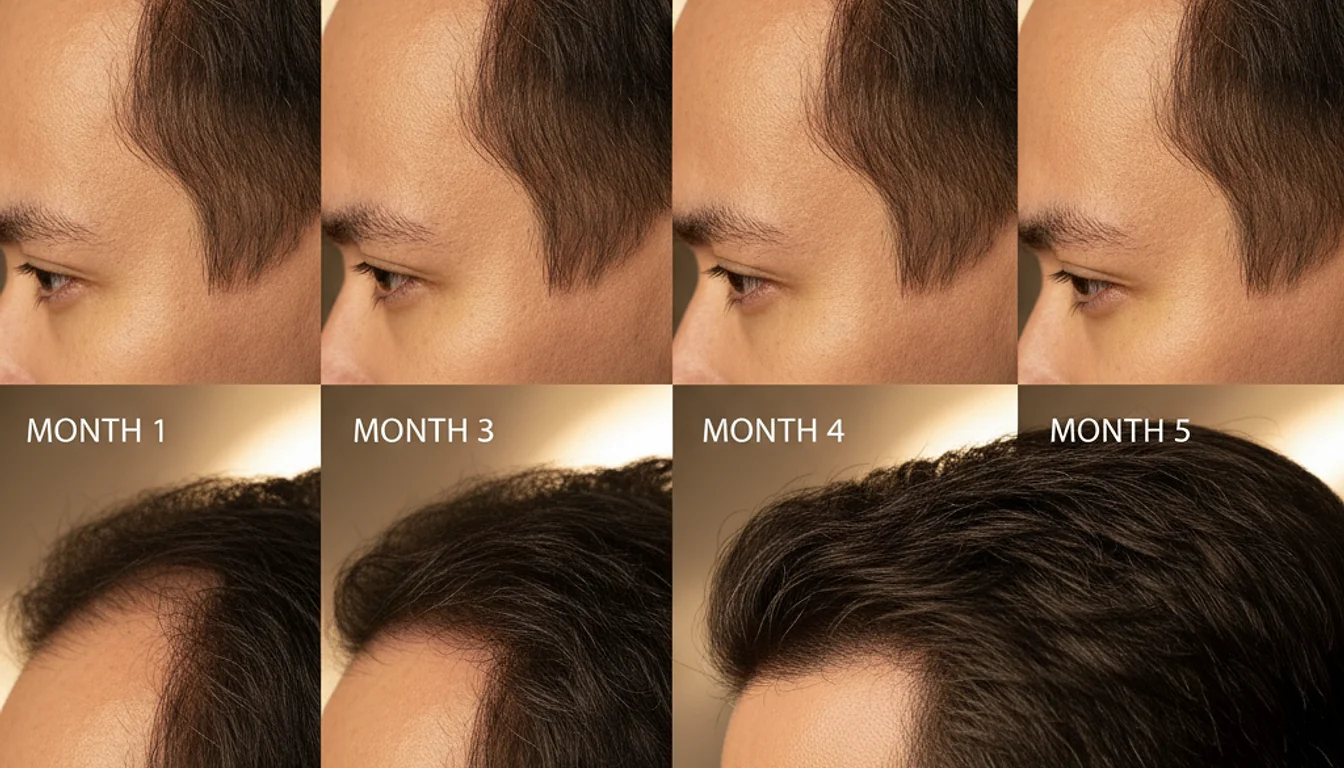
You’ll feel a difference in skin texture within about 2 weeks—less oiliness and fewer flakes. However, for the hair itself to benefit from the improved “soil,” you’re looking at the standard 3 to 6-month window. It took about 4 months of my Roman + Skin Care stack before I noticed the “peach fuzz” along my temples turning into actual, pigmented hair. Patience is the hardest part of this whole journey.
Does a “shiny” scalp mean the hair is gone forever?
Not necessarily, but it’s a sign you need to act. A “shiny” look often comes from the skin thinning out (atrophy) or being overly oily. While a perfectly smooth, mirror-like scalp usually indicates the follicles have miniaturized completely, a “shiny” area that still has some “peach fuzz” (vellus hair) can often be revitalized with the right routine. The goal of the skin care routine is to reduce that inflammation and protect the remaining follicles from further damage.
Final Thoughts: Don’t Wait Until You’re Researching Turkey
I remember being up at 3 AM in 2022, looking at flight prices to Istanbul and wondering if I’d have to sell my car for a hair transplant. If past me could read this, and realize that a few simple skin care changes and a legitimate medical treatment could have saved me years of anxiety.. things would’ve been different. You don’t need a miracle; you just need a routine that respects the skin you have left.
Medical Disclaimer
This article is for informational and educational purposes only and is not intended as a substitute for professional medical advice, diagnosis, or treatment. Always seek the advice of your physician or other qualified health provider with any questions you may have regarding a medical condition. Never disregard professional medical advice or delay in seeking it because of something you have read in this article. I am not a doctor — consult a licensed physician.