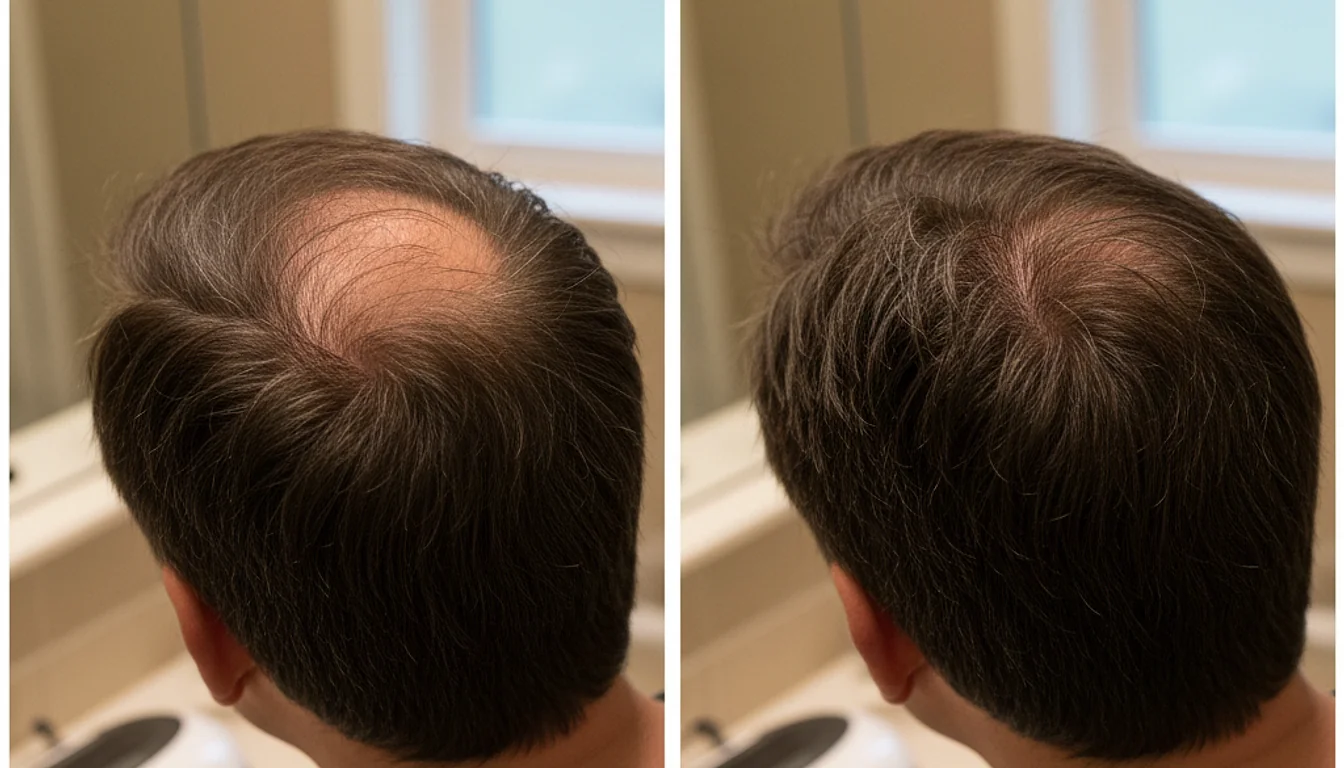
Look, I’m not saying I’m a iRestore Laser Helmet Review: Before and After 6 Months expert. But I’ve learned some things. Mostly, I’ve learned that when you’re 34 and staring at a receding hairline in a dimly lit bathroom mirror at the CVS on Wilshire Boulevard, you’ll buy almost anything that promises to bring back your 22-year-old self. I spent years throwing money at “miracle” shampoos and supplements that did nothing but make my wallet lighter and my anxiety heavier.
After 6 months of wearing what looks like a futuristic bicycle helmet while watching Netflix in my LA apartment, I finally have some clarity. The short version? The iRestore Laser Helmet can work, but it isn’t a magic wand. In my experience, it’s a solid “supporting actor” rather than the lead star. I saw a noticeable increase in hair density and a decrease in shedding after 180 days, but only because I used it as part of a broader routine. If you’re looking for a total hairline resurrection from the helmet alone, you might be disappointed.
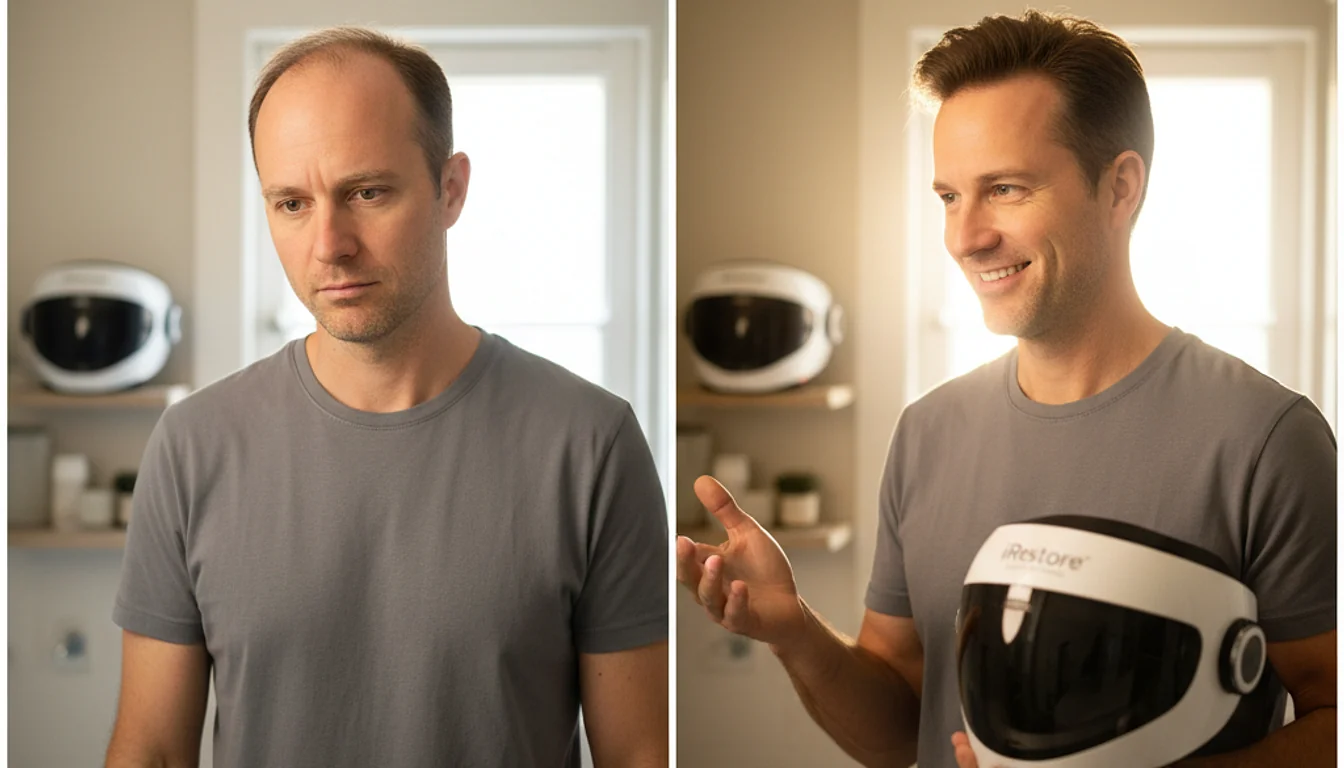
“I felt like a Daft Punk reject for 25 minutes every other day, but when my barber actually asked what I was doing differently, the embarrassment didn’t matter anymore.”
The $600 Question: What Exactly is the iRestore Helmet?
I remember the night I bought it. It was 2:45 AM, I was three deep into a Reddit rabbit hole, and I clicked “buy” on the iRestore Professional model. It cost me exactly $595 at the time (with a coupon code I found on a random forum). I felt a mix of hope and immediate buyer’s remorse. I’m a former graphic designer, so I appreciate good hardware, but this thing felt… intense.
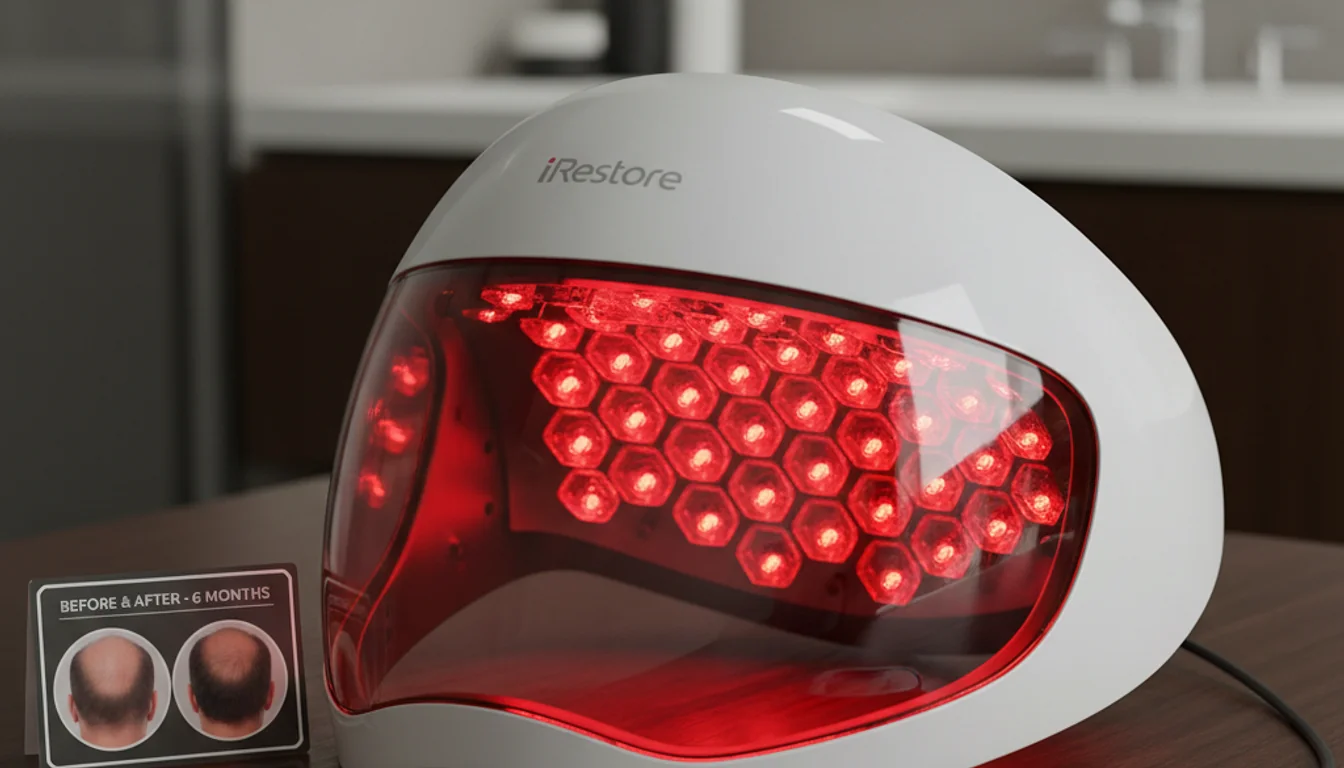
The iRestore uses Low-Level Laser Therapy (LLLT). The idea is that medical-grade lasers and LEDs “invigorate” your hair follicles. Think of it like a grow light for your scalp. It’s FDA-cleared, which sounds fancy, but keep in mind that “cleared” isn’t the same as “approved.” It just means it’s safe and similar to other products already on the market. For me, it was about finding anything to stop the bleeding—metaphorically speaking—after noticing those Early Signs of Male Pattern Baldness in Your 30s: What I Noticed First in 2026.
The Professional vs. Essential Model
I went for the Professional model because it has 282 lasers and LEDs, compared to the Essential’s 120. If I was going to look ridiculous, I wanted the maximum amount of light hitting my scalp. The Essential model covers the top, but the Professional version reaches the sides and the back. Since I was dealing with both a receding hairline and thinning at the crown, the extra $200 felt like a necessary “investment” in my self-esteem.
The Science (Without the Boring Textbook Talk)
I’m a blogger, not a doctor. But I did my homework because I didn’t want to be a sucker twice. A 2014 study published in the American Journal of Clinical Dermatology found that LLLT significantly improved hair counts in both men and women over a 16-week period. Specifically, the study showed an average increase of about 17 to 19 hairs per square centimeter.
That doesn’t sound like much until you realize how many square centimeters are on your head. However, it’s important to understand how it works. The lasers aim to extend the anagen (growth) phase of your hair cycle. Most of us losing hair have follicles that are stuck in the “resting” phase for too long. The iRestore tries to wake them up. It won’t bring a follicle back from the dead—if you’ve been bald for ten years, this won’t help—but if your hair is just thinning, there’s a chance.
Does it replace medication?
In my opinion? No. I’ve been using a topical finasteride and minoxidil spray from Roman for over two years now. When people ask about Best Hair Loss Treatments for Men in 2026: What Actually Works, I always say the meds are the foundation. The iRestore is like the fertilizer. It makes everything else work a little better. I noticed my hair felt thicker to the touch around month four, which is a common sentiment in the Roman Hair Loss for Beginners: My First Month Using It communities too.
My 6-Month Timeline: The Good, The Bad, and The Boring
Consistency is the hardest part of this. You have to wear the helmet for 25 minutes, every other day. I set a recurring alarm on my phone for 8:00 PM every Monday, Wednesday, Friday, and Sunday. If you miss days, you’re basically just wearing a very expensive hat.
- Month 1: The “Why Did I Buy This?” Phase. Nothing happened. Actually, I felt like I was shedding more hair. This is apparently normal (the “dread shed”), but it’s terrifying when you’re already worried.
- Month 3: The Plateau. Still no “new” hair, but the shedding stopped. My scalp felt healthier, less itchy. I was still skeptical, but I kept going.
- Month 4: The Barber Comment. I go to a spot in Silver Lake, and my barber, Carlos, who has been cutting my hair for five years, said, “Hey Alex, the top feels a bit more stubborn today.” He meant it was harder to comb through because it was denser. That was the first time I felt like I hadn’t wasted my money.
- Month 6: The Results. Looking at my “before” photos from early 2025 versus now, the crown is definitely more filled in. The hairline hasn’t moved forward (lasers rarely do that), but the hair that’s there is darker and thicker.
The Comfort Factor
The helmet isn’t heavy, but it is bulky. It has these little foam pads inside that can get a bit sweaty if your apartment’s AC is broken (thanks, LA summers). I usually just sat on my couch and read or played video games. You can’t really do chores with it on because it has to stay plugged into the wall unless you buy the separate battery pack for another $80—which I didn’t do because I’m not made of money.
Honest Downsides: It’s Not All Sunshine and Lasers
I promised to be honest, so here’s the truth: the iRestore can be a massive pain in the neck. First, the price is a huge barrier. Spending $600+ on a device that might work is a gamble. Second, the time commitment is real. 25 minutes doesn’t seem like much until it’s a Friday night and you just want to go to sleep but you haven’t done your “laser time.”
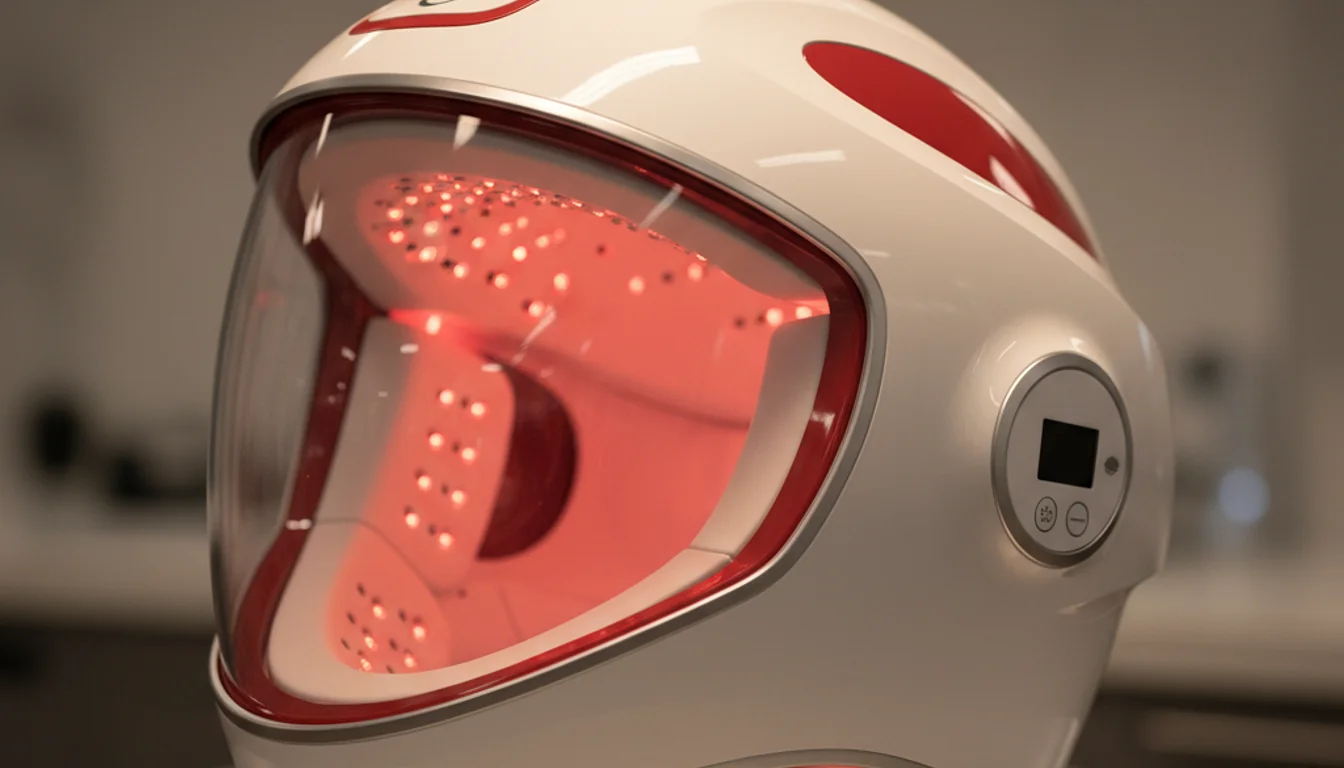
Also, let’s talk about the “look.” You cannot wear this in front of anyone you’re trying to impress. My girlfriend was supportive, but even she couldn’t help but laugh when I’d sit there with red lights glowing through the vents of the helmet like some sort of budget superhero. If you live with roommates, be prepared for some jokes.
Is it better than a laser comb?
I tried a laser comb back in 2022. It was a nightmare. You have to manually move the comb over your head every few seconds for 15 minutes. My arm would get tired, and I never knew if I was hitting the same spot twice. The helmet is “set it and forget it,” which is the only reason I was able to stick with it for 6 months. Manual devices are cheaper, but they usually end up in a drawer gathering dust.
How to Maximize Your Results
If you’re going to do this, do it right. Don’t just buy the helmet and hope for the best. Based on my journey and a lot of trial and error, here is the protocol I’d suggest to a friend:
- Combine it with DHT blockers. LLLT is great, but it doesn’t stop the root cause of male pattern baldness (DHT). I recommend getting a professional opinion on a topical or oral finasteride.
- Take “Before” Photos. You see your face every day, so you won’t notice the gradual changes. Take photos in the same light every 30 days.
- Wash your hair first. Lasers penetrate better through a clean scalp. I found that if I had a lot of product (like sea salt spray) in my hair, the treatment felt less effective.
- Don’t skip sessions. Treat it like a prescription. I missed a week during a trip to New York last November, and I swear I noticed more shedding the following week.
The cost of all this adds up. Between the iRestore ($600), my Roman subscription (about $30-50 a month), and decent shampoo, I’m spending a fair bit. But compared to the $10,000 I was quoted for a hair transplant in Beverly Hills? It’s a bargain.
Final Verdict: Should You Buy It?
If you have the disposable income and you’re already doing the “big two” (finasteride and minoxidil), then yes, the iRestore is a great addition. It gave my hair that extra 15% of density that the meds couldn’t quite reach. It’s safe, it’s easy to use, and the 6-month money-back guarantee they offer (check their site, it changes) gives you some peace of mind.
However, if you’re choosing between this and medication, choose the medication first. The iRestore is the icing on the cake, not the cake itself. I’m happy I have it, and I’ll keep using it, but it wasn’t the sole savior of my hairline.
If you’re still confused about where to start, I always tell people to take the 2-minute quiz at Roman. It’s how I finally stopped wasting money on biotin gummies and started a routine that actually worked. It’s private, you don’t need insurance, and a doctor reviews everything. It’s the easiest “win” you can get in this process.
💬 Frequently Asked Questions
Feel free to tell me I’m an idiot in the comments if you think $600 is too much for a laser hat. Honestly, sometimes I still think it is, but then I look in the mirror and I’m just glad I’m not wearing a beanie in 90-degree weather anymore.
I’m not a doctor—consult a licensed physician before starting any new hair loss treatment.
Medical Disclaimer
This article is for informational and educational purposes only and is not intended as a substitute for professional medical advice, diagnosis, or treatment. Always seek the advice of your physician or other qualified health provider with any questions you may have regarding a medical condition. Never disregard professional medical advice or delay in seeking it because of something you have read in this article.